


Workflow overview
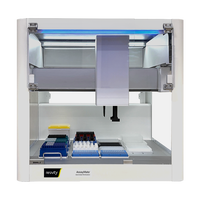
Discover how the AssayMate workstation reduces manual bottlenecks, scales throughput, and supports reproducible results across specialized microplate workflows.
- Eliminates manual pipetting noise in your assay preparation
- Reduces tedious workflows with on-deck modules and integrated gripper
- Safeguards sensitive sample environments with adjustable velocity air-displacement dispensing
- Expands walk-away time with deck capacity and reconfigurability
- Executes protocols pre-built with the easy-to-use on-premise software, safe from cloud update disruptions
- Provides simulation visualization before actual run and run report for traceability afterwards
The AssayMate workstation brings automation consistency directly to your benchtop.

Homogeneous no-wash immunoassays automation
Transitioning to the AssayMate system helps reduce manual chokepoints by automating the serial dilution of lysates and the precise dispensing of analytes, donor mix, and acceptor mix.
Transitioning to the AssayMate system helps reduce manual chokepoints by automating the serial dilution of lysates and the precise dispensing of analytes, donor mix, and acceptor mix.
AlphaLISA® SureFire® Ultra workflow steps
- Create control lysates by serial dilution
- Distribute 10 μL of standards to microplate wells (10x)
- Add 5 μL acceptor mix to each assay well
- Seal microplate
- Incubate 60 minutes
- Unseal microplate
- Add 5 μL donor mix to each assay well
- Seal microplate
- Incubate overnight
- Unseal microplate
How does transitioning from manual pipetting to the AssayMate system improve assay data reliability:
- Automated dilutions tighten precision: It fully automates the serial dilution of lysates and multi-dispensing of mix to reduce human technical noise.
- Locks in low coefficients of variation (CV): It drives down signaling assay data variability to hit precise 2.1% to 3.5% CVs.
- Enables High-Density Plate Transfers: Its standard 8-channel and gripper setup reliably moves low-volume analytes into 384 shallow-well plates.

High-throughput cell counting & viability automation
Transform labor-intensive, multi-step operations, such as manual cell counting and staining plate preparation and reduce bench time for increased research analysis time.
Transform labor-intensive, multi-step operations, such as manual cell counting and staining plate preparation and reduce bench time for increased research analysis time.
Automated Cell Prep workflow steps
- Load reservoir with cell stock, cell culture media, and AO/PI solution into a 12-column reservoir.
- Dilute: prepare 12 biological replicates in a 96-well storage plate across 4 dilution fractions (DFs) with 3 replicates each. Mix cells and media at the target ratio, mixing 10 times per replicate.
- Stain: add AO/PI solution at a 1:1 ratio to each replicate. Mix 10 times.
- Transfer 3 replicate observations per biological replicate into one row of the Ergonomic 8×3 cell counting plate, resulting in 36 total observations across 2 plates.
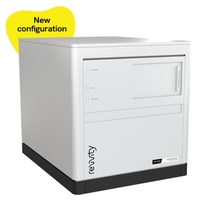
- Scan the completed cell counting plates on the Cellaca™ MX multimode plate reader.
How does the AssayMate workstation streamline cell counting preparation workflows compared to manual methods:
- Compresses 20 manual steps down to 4: It eliminates labor-intensive mixing, staining, and loading checkpoints by automating the protocol.
- Cuts hands-on prep time by 70%: the automated process slashes bench time while matching the accuracy and cell viability of manual experts.
- Maintains high linearity benchmarks: It delivers high linearity in cell concentrations (R2 > 0.99) to align with international standards.

3D cell culture screening and ATP-based cytotoxicity analysis automation
3D spheroids offer physiologically relevant insights but are sensitive to physical handling. The AssayMate pipetting technology can execute delicate low-volume aspiration without spheroid loss.
3D spheroids offer physiologically relevant insights but are sensitive to physical handling. The AssayMate pipetting technology can execute delicate low-volume aspiration without spheroid loss.
AssayMate process steps for the organoid / spheroid workflow:
- Remove partial medium: The AssayMate system aspirates and removes a portion of the culture medium from the spheroid plate.
- Starting volume: 150 µL
- Reduced to 100 µL remaining
- Minimum achievable: 30 µL without spheroid loss
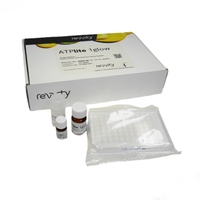
- Dispense ATPlite™ 1glow-L reagent at a 1:1 ratio into the remaining medium.
- Transfer 30 µL of the assay mixture per well to OptiPlate™ 96-well 1/2 Area plate to, after the 30-minute incubation, in preparation for the luminescence reading with the EnVision Nexus™ multimode microplate reader
How does the AssayMate automated pipetting improve performance compared to a manual process for spheroid workflows:
- Achieved 0% spheroid loss dispensing in testing: Its precise air-displacement pipetting executes delicate culture media cuts down to 30 microliters.
- Controlled shear force. Manual process introduces handling variability. The AssayMate mechanical piston delivers identical, low-velocity fluid dynamics across every well, preventing the physical breakdown of the spheroids.
- Enables stable passive lysis screening: It dispenses reagents uniformly to support complete spheroid lysis in thirty minutes without shaking.


Featured resources
FAQs
-
How many SBS deck slots does the AssayMate liquid handler feature in comparison to entry-level automated pipettors?
The AssayMate workstation offers a reconfigurable 16-slot total capacity, consisting of 12 main deck positions and 4 off-deck staging slots easily accommodating the optional thermal cycler module. This provides more deck capacity than many compact systems, allowing for extended walk-away automation of multi-step workflows at a fraction of the cost of a large-scale liquid handling workstation.
-
How does transitioning to automated cell preparation improve laboratory throughput?
While downstream imaging systems can read plates in seconds, manual sample preparation creates a major operational bottleneck. The AssayMate workstation compresses complex, labor-intensive 20-step manual cell preparation and staining workflows down to just 4 automated core steps. This helps reduce operator-to-operator data variability, supports hands-free walk-away time, and reduces hands-on bench time by approximately 70%.
-
What pipetting channel configurations and volume ranges does the workstation support?
The AssayMate features an 8-channel pipetting head. It supports dynamic volume ranges from low-volume microliter transfers up to standard assay additions, providing the flexibility needed for rapid serial dilutions, cell stock collection, and dye distribution without forcing operators to manually exchange tools mid-run.
-
How does the AssayMate liquid handling system prevent spheroid loss during liquid handling?
The AssayMate workstation reduces spheroid loss by replacing inconsistent manual pipetting with controlled, low-shear air-displacement technology. By regulating aspiration and dispensing velocities, the system helps to prevent the physical breakdown or accidental displacement of delicate 3D microenvironments, ensuring sample retention across multi-step washing and reagent addition protocols.

