US

Revvity Sites Globally
Select your location.
*e-commerce not available for this region.



A1.5 mL Reducer Adapter Plate for 1.5 mL microcentrifuge Tubes on RS 4/100 (4/pk)
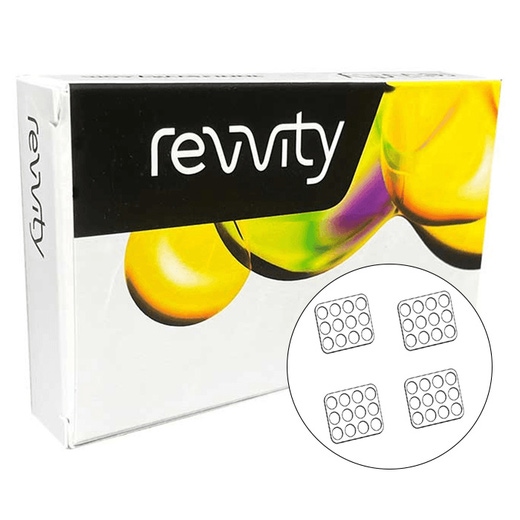
A1.5 mL Reducer Adapter Plate for 1.5 mL microcentrifuge Tubes on RS 4/100 (4/pk)
A1.5 mL Reducer Adapter Plate for 1.5 mL microcentrifuge tubes onswing-out rotor RS 4/100 (4/pk)
A1.5 mL Reducer Adapter Plate for 1.5 mL microcentrifuge Tubes on RS 4/100 (4/pk)
Centrifuge adapters and reducer adapter plates for both fixed-angle and swing-out bucket rotors.
Note: Sample tubes, collection vessels, centrifuge rotors, centrifuge buckets, and inserts are sold separately.
Product variants
Type: A15 Adapters for 15 mL Tubes on RA 6/50
Instrument Compatibility
CF-260 centrifuge, CF-350 centrifuge
Product Compatibility
15 mL conical tubes
Part #:
462092
List price
USD 188.00
Your online price:
Type: A5 Adapters for 5 to 10 mL Tubes on RA 30/15 or RA 30/12
Instrument Compatibility
CF-350 centrifuge
Product Compatibility
5 mL blood collection tubes
Part #:
450283
List price
USD 329.00
Your online price:
Type: A5 Adapters for 5 to 10 mL Tubes on RA 12/12
Instrument Compatibility
CF-220 centrifuge
Product Compatibility
5 mL blood collection tubes
Part #:
450282
List price
USD 176.00
Your online price:
Type: A5 Adapters for 5 to 10 mL Tubes on RA 8/15
Instrument Compatibility
CF-220 centrifuge, CF-260 centrifuge, CF-350 centrifuge
Product Compatibility
5 mL blood collection tubes
Part #:
450281
List price
USD 117.00
Your online price:
Type: A0.5 Adapter for 0.5 mL PCR Tubes on RA 24/2 or RA 30/2
Instrument Compatibility
CF-260 centrifuge, CF-350 centrifuge
Product Compatibility
0.5 mL PCR tubes
Part #:
284349
List price
USD 12.00
Your online price:
Type: A0.2 Adapter for 0.2 mL PCR Tubes on RA 24/2 or RA 30/2
Instrument Compatibility
CF-260 centrifuge, CF-350 centrifuge
Product Compatibility
0.2 mL PCR tubes
Part #:
284351
List price
USD 12.00
Your online price:
Type: A0.2-0.4 Reducer Adapter Plate for 0.2 mL PCR Tubes on RS 4/100
Instrument Compatibility
CF-260 centrifuge, CF-350 centrifuge
Product Compatibility
0.2 mL PCR tubes
Part #:
168782
List price
USD 70.00
Your online price:
Type: A0.5 Reducer Adapter Plate for 0.5 mL PCR Tubes on RS 4/100
Instrument Compatibility
CF-260 centrifuge, CF-350 centrifuge
Product Compatibility
0.5 mL PCR tubes
Part #:
168783
List price
USD 70.00
Your online price:
Type: A1.5 mL Reducer Adapter Plate for 1.5 mL tubes on RS 4/100
Instrument Compatibility
CF-260 centrifuge, CF-350 centrifuge
Product Compatibility
1.5 mL microcentrifuge tubes
Part #:
168784
List price
USD 70.00
Your online price:
For research use only. Not for use in diagnostic procedures.
| Feature | Specification |
|---|---|
| Quantity | 4 |
| Sample Volume | 1.5 mL |
| Angle | 90° |
| Maximum G Force | 3,505 rcf |
| Feature | Specification |
|---|---|
| Quantity | 4 |
| Sample Volume | 1.5 mL |
| Angle | 90° |
| Maximum G Force | 3,505 rcf |
Product information
Overview
Reducer Adapter Plates used to support 1.5 mL - 2 mL PCR tubes on the centrifuge rotor RS 4/100 (4-placement, swing-out rotor supporting maximum 100 mL per placement) using I100 12/5 inserts. The adapter plate has 'slots' where the tubes are supported, so you need only 1 adapter plate per insert (or placement).
Note: Purchase of 1 unit is 4 adapter plate. Each plate supports one insert (placement), so to support, for example all inserts at full capacity per run on the centrifuge, you only need to order 1 unit.
Centrifuge adapters and reducer adapter plates are important when maximizing the usability of your centrifuge and rotor to support diverse tube types properly and safely. They help researchers utilize different size tubes and/or collection vessels into the same centrifuge bucket or rotor with ease to properly support safe sample centrifugation across our offering of centrifuges and centrifuge accessories for both fixed angle rotors and those that support swing-out bucket with inserts/lids.
As a standard nomenclature for our adapters (and reducer adapter plates), they are labelled AX, where A stands for Adapter and X for the tube size (mL) supported. For example, A0.5 supports 0.5 mL tubes, A5 supports 5 mL tubes, et al.
Specifications
| Angle |
90°
|
|---|
| Instrument Compatibility |
CF-260 centrifuge
CF-350 centrifuge
|
|---|---|
| Maximum G Force |
3,505 rcf
|
| Product Compatibility |
1.5 mL microcentrifuge tubes
|
| Quantity |
4
|
| Sample Volume |
1.5 mL
|
| Type |
A1.5 mL Reducer Adapter Plate for 1.5 mL tubes on RS 4/100
|
Resources
Are you looking for resources, click on the resource type to explore further.


Loading...
How can we help you?
We are here to answer your questions.