
Revvity Sites Globally
Select your location.
*e-commerce not available for this region.

AlphaLISA SureFire Ultra Human Total IκKα Detection Kit, 500 Assay Points

 View All
AlphaLISA SureFire Ultra Human Total IκKα Detection Kit, 500 Assay Points


AlphaLISA Surefire Ultra Total Protein
The AlphaLISA™ SureFire® Ultra™ total IKKα assay is a sandwich immunoassay for quantitative detection of IKKα (phosphorylated and non-phosphorylated) in cellular lysates using Alpha Technology. This assay is intended to be a normalization phosphorylation studies.
| Feature | Specification |
|---|---|
| Application | Cell Signaling |
| Protocol Time | 2h at RT |
| Sample Volume | 10 µL |
The AlphaLISA™ SureFire® Ultra™ total IKKα assay is a sandwich immunoassay for quantitative detection of IKKα (phosphorylated and non-phosphorylated) in cellular lysates using Alpha Technology. This assay is intended to be a normalization phosphorylation studies.
Product variants
Unit Size: 500 assay points
Part #:
ALSU-TIKKA-A500
List price
USD 2,490.00
Your price:
Unit Size: 10,000 assay points
Part #:
ALSU-TIKKA-A10K
List price
USD 14,982.00
Your price:
Unit Size: 50,000 assay points
Part #:
ALSU-TIKKA-A50K
List price
USD 47,624.00
Your price:
Unit Size: 100 assay points
Part #:
ALSU-TIKKA-A-HV
List price
USD 737.00
Your price:
For research use only. Not for use in diagnostic procedures. All products to be used in accordance with applicable laws and regulations including without limitation, consumption, and disposal requirements under European REACH regulations (EC 1907/2006).
AlphaLISA SureFire Ultra Human Total IκKα Detection Kit, 500 Assay Points
AlphaLISA Surefire Ultra Total Protein
Loading...
Product information
Overview
The AlphaLISA™ SureFire® Ultra™ total IKKα assay is a sandwich immunoassay for quantitative detection of total IKKα (phosphorylated and non-phosphorylated) in cellular lysates using Alpha Technology.
Formats:
- The HV (high volume) kit contains reagents to run 100 wells in 96-well format, using a 60 μL reaction volume.
- The 500-point kit contains enough reagents to run 500 wells in 384-well format, using a 20 μL reaction volume.
- The 10,000-point kit contains enough reagents to run 10,000 wells in 384-well format, using a 20 μL reaction volume.
- The 50,000-point kit contains enough reagents to run 50,000 wells in 384-well format, using a 20 μL reaction volume.
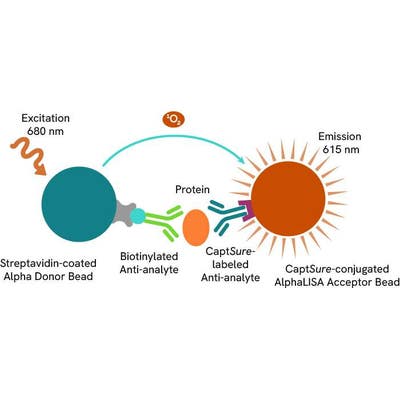
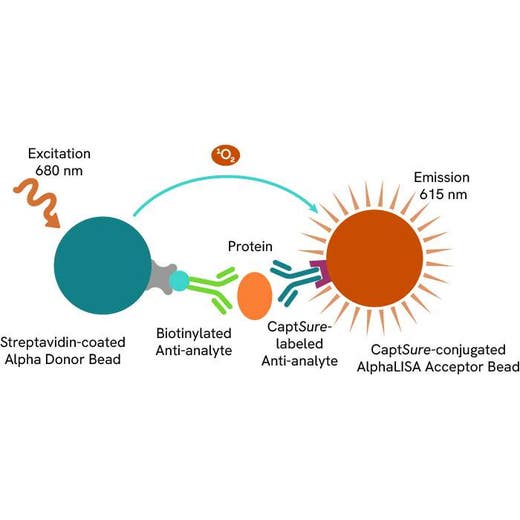
In the AlphaLISA SureFire Ultra assay, Donor beads are coated with streptavidin to capture one of the antibodies, which is biotinylated. Acceptor beads are coated with a proprietary CaptSure™ agent that immobilizes the other antibody, labeled with a CaptSure tag. In the presence of target protein, the two antibodies bring the Donor and Acceptor beads close together, generating signal. The amount of light emission is directly proportional to the amount of protein present in the sample.
AlphaLISA SureFire Ultra kits are compatible with:
- Cell and tissue lysates
- Antibody modulators
- Biotherapeutic antibodies
Alpha SureFire kits can be used for:
- Cellular kinase assays
- Receptor activation studies
- Screening
How it works
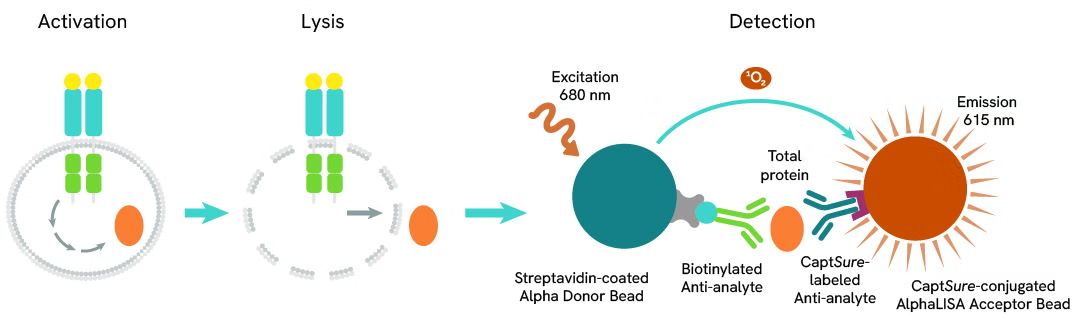
Total-AlphaLISA SureFire Ultra assay principle
The Total-AlphaLISA SureFire Ultra assay measures the expression level of a target protein in a biological sample (e.g. cell lysate).
The Total-AlphaLISA SureFire Ultra assay uses two antibodies which recognize two different distal epitopes on the target protein. AlphaLISA assays require two bead types: Acceptor and Donor Beads. Acceptor Beads are coated with a proprietary CaptSure™ agent to specifically immobilize the assay specific antibody, labeled with a CaptSure tag. Donor Beads are coated with streptavidin to capture one of the detection antibodies, which is biotinylated. In the presence of target protein, the two antibodies bring the Donor and Acceptor Beads in close proximity whereby the singlet oxygen transfers energy to excite the Acceptor Bead, allowing for the generation of a luminescent Alpha signal. The amount of light emission is directly proportional to the quantity of protein present in the sample.
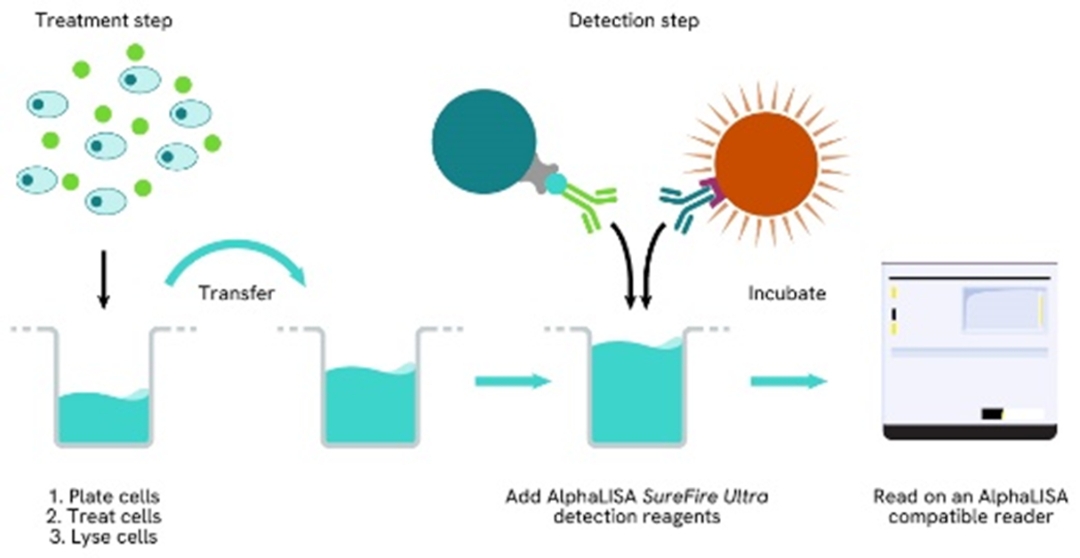
Total-AlphaLISA SureFire Ultra two-plate assay protocol
The two-plate protocol involves culturing and treating the cells in a 96-well plate before lysis, then transferring lysates into a 384-well OptiPlate™ plate before the addition of Total-AlphaLISA SureFire Ultra detection reagents. This protocol enables cell viability and confluence to be monitored. In addition, lysates from a single well can be used to measure multiple targets.
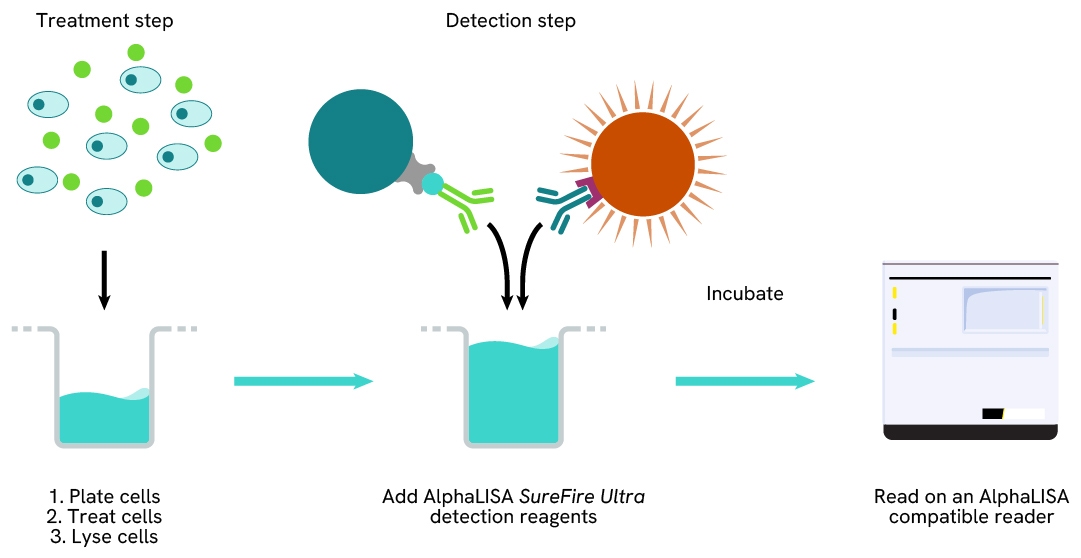
Total-AlphaLISA SureFire Ultra one-plate assay protocol
Detection of Total target protein with AlphaLISA SureFire Ultra reagents can be performed in a single plate used for culturing, treatment, and lysis. No washing steps are required. This HTS designed protocol allows for miniaturization while maintaining robust AlphaLISA SureFire Ultra quality.
Assay validation
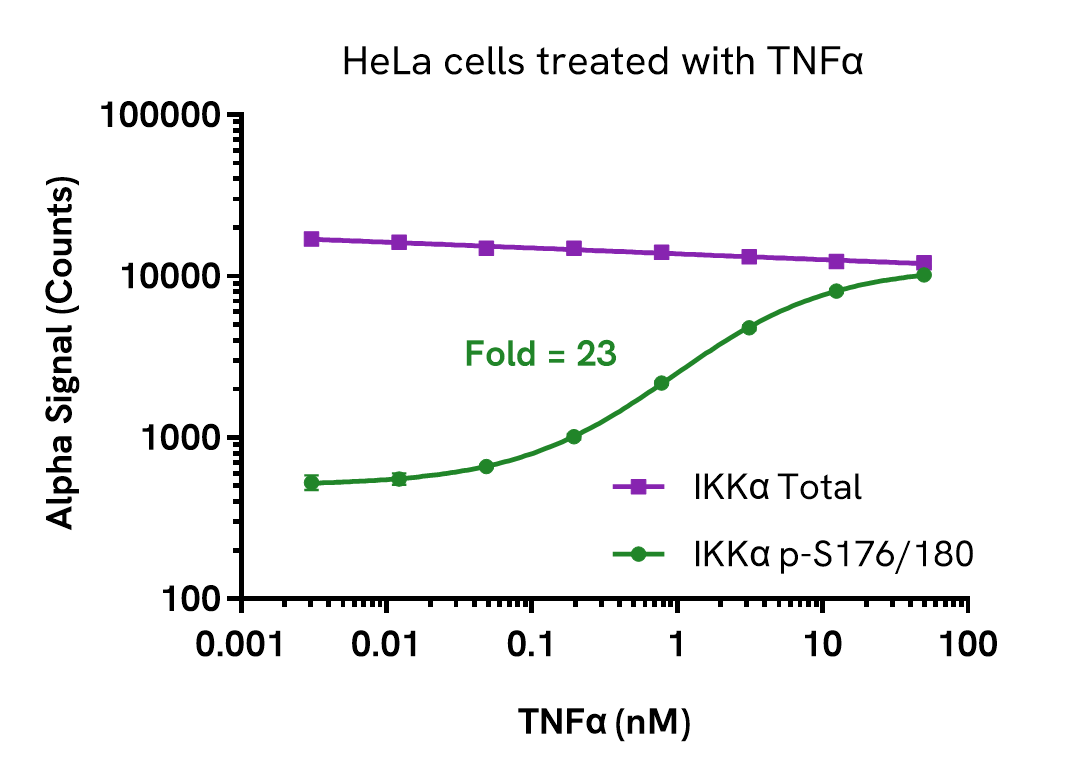
Induction of IKKα phosphorylation in TNFα treated cells
HeLa cells were seeded in a 96-well plate (20,000 cells/well) in complete medium and incubated for 48 hours at 37°C, 5% CO2. The cells were treated with increasing concentrations of TNFα for 10 minutes in media containing 40 nM calyculin A.
After treatment, the cells were lysed with 100 µL of Lysis Buffer for 10 minutes at RT with shaking (350 rpm). IKKα Total and Phospho (Ser176/180) were evaluated using respective AlphaLISA SureFire Ultra assays. For the detection step, 10 µL of cell lysate (approximately 4,000 cells) was transferred into a 384-well white OptiPlate, followed by 5 µL of Acceptor mix and incubated for 1 hour at RT. Finally, 5 µL of Donor mix was then added to each well and incubated for 1 hour at RT in the dark. The plate was read on an Envision using standard AlphaLISA settings.
As expected, TNFα triggered a dose-dependent increase in the levels of Phospho (Ser176/180) while Total IKKα remained unchanged.
Assay specificity/selectivity
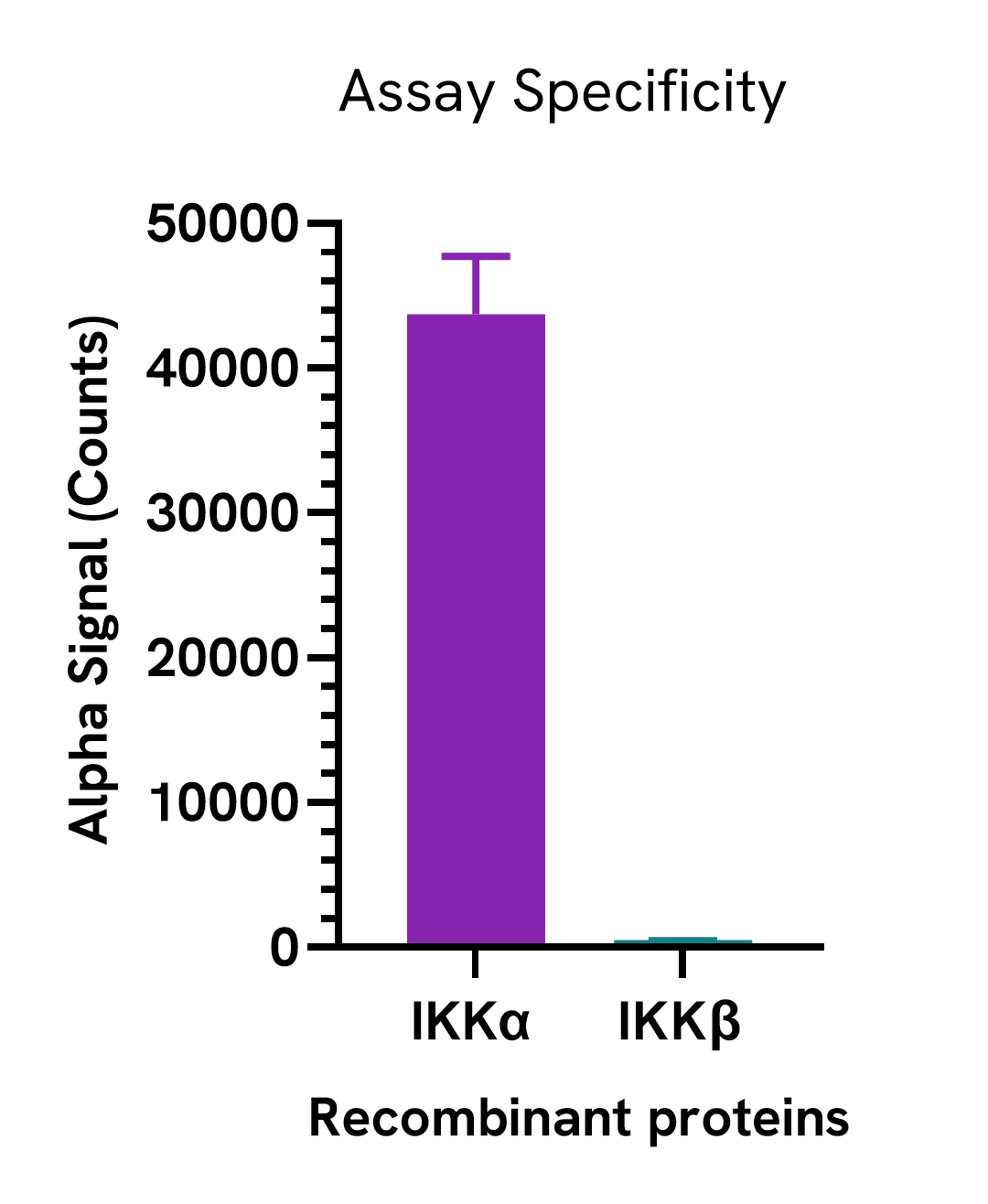
Specificity of the Total IKKα assay
Specificity of the Total IKKα assay was assessed by evaluating recombinant IKKα (Abcam, ab102103) and IKKβ (Millipore, 14-485) active recombinant proteins.
Both proteins were prepared at 15 ng/ml in Lysis Buffer, and IKKα Total signal was evaluated using the AlphaLISA SureFire Ultra assay. For the detection step, 10 µL of protein was transferred into a 384-well white OptiPlate, followed by 5 µL of Acceptor mix and incubated for 1 hour at room temperature. Finally, 5 µL of Donor mix was then added to each well and incubated for 1 hour at RT in the dark. The plate was read on an Envision using standard AlphaLISA settings.
IKKα Total signal was only detected with IKKα recombinant protein demonstrating assay specificity.
Assay versatility
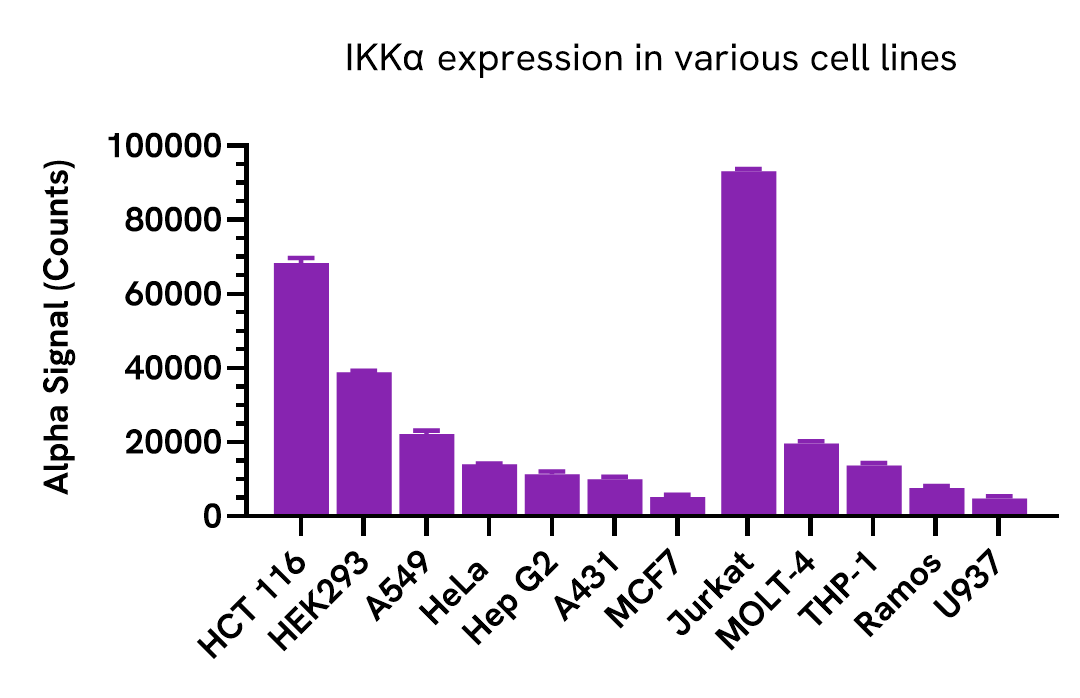
IKKα expression in various cell lines
Adherent cells were grown to confluency in a T175 flask and lysed with Lysis Buffer at a density of 1 x 10⁶ cells/mL. Suspension cells were harvested, washed with HBSS and lysed with Lysis Buffer at a density of 3.2 x 10⁶ cells/mL.
IKKα Total levels were evaluated by AlphaLISA SureFire Ultra. For the detection step, 10 µL of cell lysate (5,000 adherent and 15,000 suspension cells) was transferred into a 384-well white OptiPlate, followed by 5 µL of Acceptor Mix and incubated for 1 hour at RT. Finally, 5 µL of Donor Mix was then added to each well and incubated for 1 hour at RT in the dark. The plate was read on an Envision using standard AlphaLISA settings.
As expected, Total IKKα protein is expressed in a wide range of cell types.
Assay sensitivity
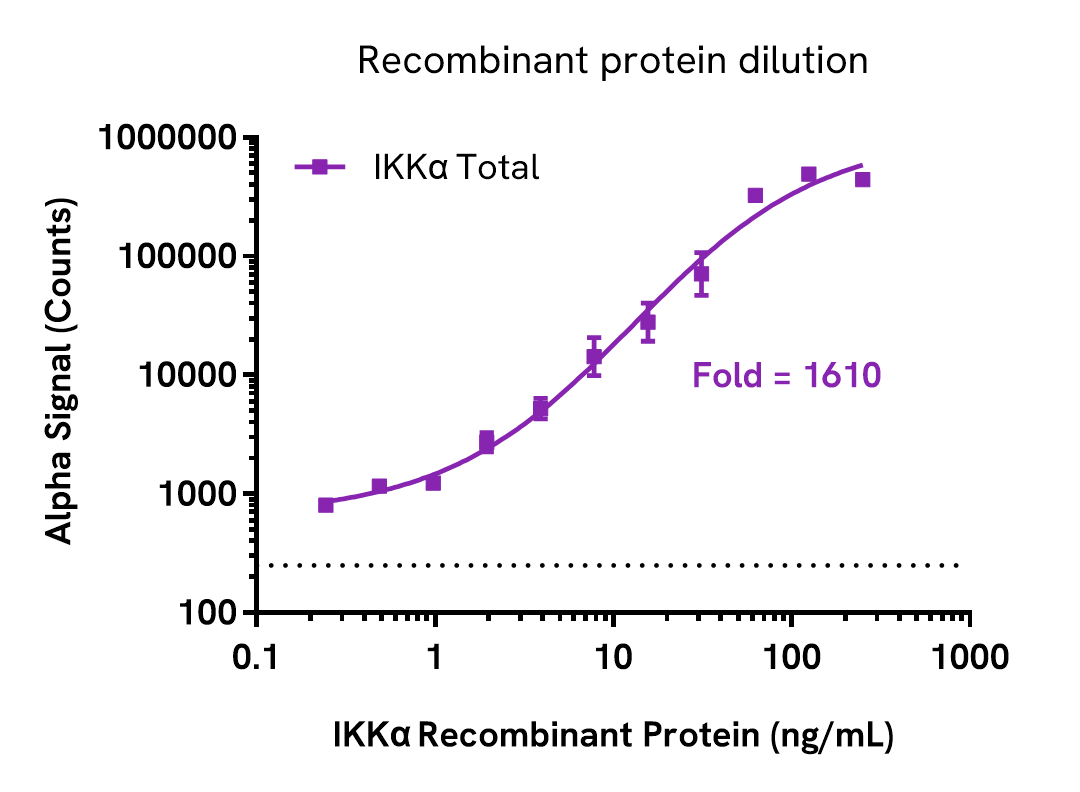
IKKα Assay sensitivity - recombinant protein
Dilutions of recombinant IKKα (Abcam, ab102103) were prepared in Lysis Buffer and IKKα levels were evaluated by AlphaLISA SureFire Ultra. For the detection step, 10 µL of protein was transferred into a 384-well white OptiPlate, followed by 5 µL of Acceptor mix and incubated for 1 hour at room temperature. Finally, 5 µL of Donor mix was then added to each well and incubated for 1 hour at RT in the dark. The plate was read on an Envision using standard AlphaLISA settings.
IKKα can be detected using this assay at levels down to 250 pg/mL.
Specifications
| Application |
Cell Signaling
|
|---|---|
| Automation Compatible |
Yes
|
| Brand |
AlphaLISA SureFire Ultra
|
| Cellular or Signaling Pathway |
NF-κB signaling
|
| Detection Modality |
Alpha
|
| Lysis Buffer Compatibility |
Lysis Buffer
|
| Molecular Modification |
Total
|
| Product Group |
Kit
|
| Protocol Time |
2h at RT
|
| Sample Volume |
10 µL
|
| Shipping Conditions |
Shipped in Blue Ice
|
| Target |
IκKα
|
| Target Class |
Phosphoproteins
|
| Target Species |
Human
|
| Technology |
Alpha
|
| Unit Size |
500 assay points
|
Video gallery
AlphaLISA SureFire Ultra Human Total IκKα Detection Kit, 500 Assay Points
Resources
Are you looking for resources, click on the resource type to explore further.

Guide
AlphaLISA SureFire Ultra assay optimization
This guide outlines further possible optimization of cellular and immunoassay parameters to ensure the best possible results are...
Guide
AlphaLISA SureFire Ultra: the ultimate guide for successful experiments
The definitive guide for setting up a successful AlphaLISA SureFire Ultra assay
Several biological processes are regulated by...

Brochure
Alpha SureFire Ultra no-wash immunoassay catalog
Discover Alpha SureFire® Ultra™ assays, the no-wash cellular kinase assays leveraging Revvity's exclusive bead-based technology...

Application Note
Characterizing chemokine receptor inhibitors with AlphaLISA SureFire Ultra, Alpha SureFire Ultra Multiplex and LANCE Ultra cAMP assays
The measurement of protein phosphorylation is a useful tool for measuring the modulation of receptor activation by both antibodies...
Brochure
Species compatibility for HTRF, AlphaLISA SureFire Ultra and Alpha SureFire Ultra Multiplex assays
This document includes detailed tables listing HTRF™, AlphaLISA™ SureFire® Ultra™, and Alpha SureFire® Ultra™ Multiplex assays...
Loading...


How can we help you?
We are here to answer your questions.