
US

Revvity Sites Globally
Select your location.
*e-commerce not available for this region.

AlphaLISA SureFire Ultra Multiplex Biotin-Free Human Phospho-IRF5 (Ser446 & total) Detection Kit, 100 Assay Points
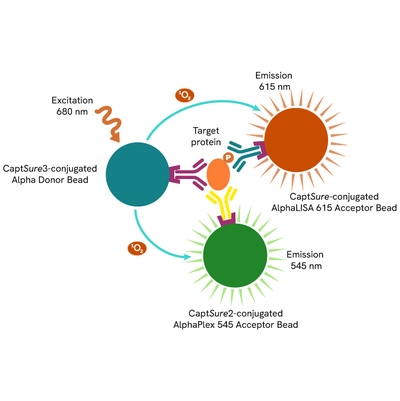
AlphaLISA SureFire Ultra Multiplex Biotin-Free Human Phospho-IRF5 (Ser446 & total) Detection Kit, 100 Assay Points
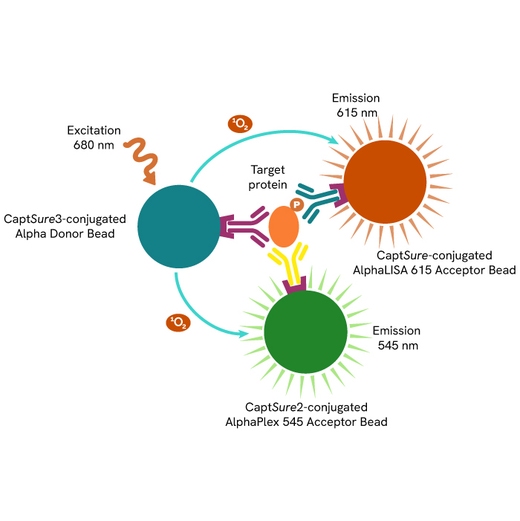
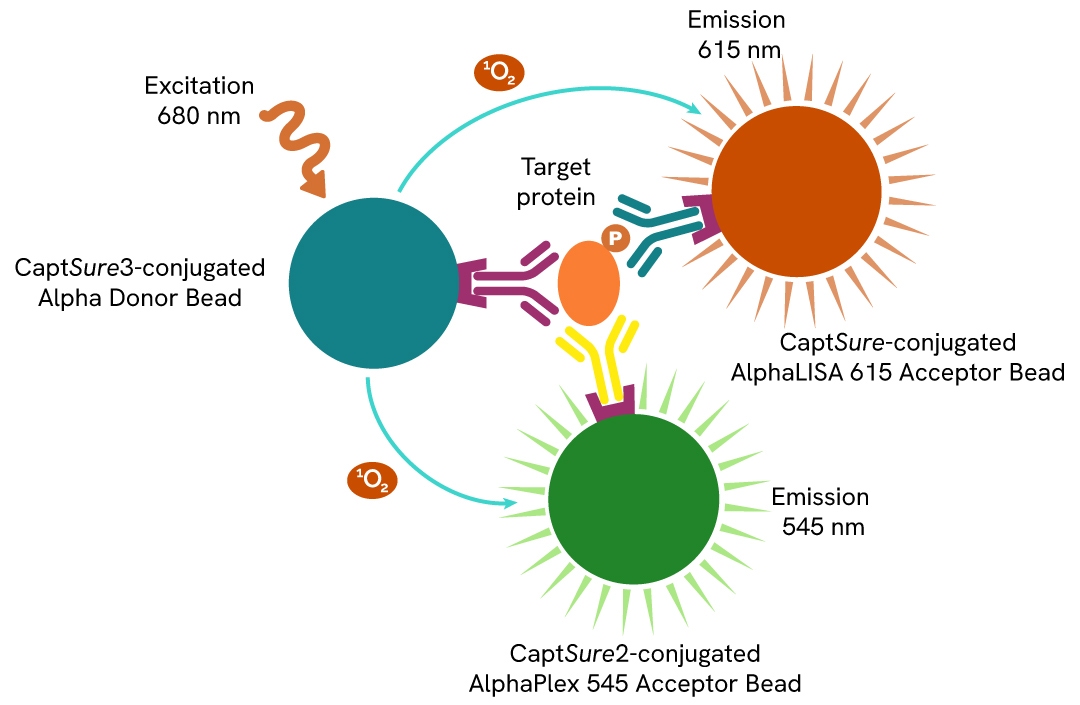
Principle of the Multiplex SureFire Biotin Free assay
The AlphaLISA™ SureFire® Ultra™ Multiplex Biotin-Free Human Phospho-IRF5 (Ser446 & total) assay is a sandwich immunoassay for simultaneous quantitative detection of phospho-IRF5 (Ser446) and total IRF5 in cellular lysates using Alpha Technology.
| Feature | Specification |
|---|---|
| Application | Cell Signaling |
| Protocol Time | 2h at RT |
| Sample Volume | 30 µL |
The AlphaLISA™ SureFire® Ultra™ Multiplex Biotin-Free Human Phospho-IRF5 (Ser446 & total) assay is a sandwich immunoassay for simultaneous quantitative detection of phospho-IRF5 (Ser446) and total IRF5 in cellular lysates using Alpha Technology.
Product variants
Unit Size: 100 Assay Points
Part #:
MSBF-PTIRF5-K-HV
List price
USD 1,328.00
Your price:
Unit Size: 500 Assay Points
Part #:
MSBF-PTIRF5-K500
List price
USD 4,482.00
Your price:
Unit Size: 10,000 Assay Points
Part #:
MSBF-PTIRF5-K10K
List price
USD 27,061.00
Your price:
Unit Size: 50,000 Assay Points
Part #:
MSBF-PTIRF5-K50K
List price
USD 83,612.00
Your price:
For research use only. Not for use in diagnostic procedures. All products to be used in accordance with applicable laws and regulations including without limitation, consumption and disposal requirements under European REACH regulations (EC 1907/2006).
AlphaLISA SureFire Ultra Multiplex Biotin-Free Human Phospho-IRF5 (Ser446 & total) Detection Kit, 100 Assay Points
Principle of the Multiplex SureFire Biotin Free assay
Loading...
Product information
Overview
Interferon Regulatory Factor 5 (IRF5) is a transcription factor of the IRF family that plays central roles in innate immune activation, inflammatory cytokine production, and macrophage polarization. IRF5 is activated downstream of Toll-like receptors (TLRs), particularly TLR7 and TLR9, through MyD88-dependent signaling, leading to IRF5 phosphorylation, dimerization, and nuclear translocation to drive transcription of pro-inflammatory cytokines including TNF-α, IL-6, IL-12, and IL-23. IRF5 is a key determinant of M1 macrophage polarization, promoting the classically activated pro-inflammatory macrophage phenotype while suppressing M2 anti-inflammatory polarization, and its expression level in macrophages is a major determinant of inflammatory disease susceptibility. IRF5 polymorphisms are among the strongest genetic risk factors for systemic lupus erythematosus (SLE), rheumatoid arthritis, inflammatory bowel disease, and other autoimmune conditions, underscoring its central role in pathological inflammation. In cancer, IRF5 has been shown to function as a tumor suppressor by promoting apoptosis and activating p53 target genes, and its loss is associated with tumor immune evasion through impaired macrophage inflammatory responses. IRF5 is an emerging therapeutic target in autoimmune disease, with efforts focused on disrupting IRF5 dimerization and DNA binding as strategies to attenuate pathological inflammation.
The AlphaLISA Multiplex SureFire Ultra Biotin-Free Human Phospho-IRF5 (Ser446 & total) Detection Kit is designed to simultaneously measure phosphorylated and total endogenous IRF5 levels in cellular lysates using a multiplex AlphaLISA™ Biotin-Free, no-wash assay. No specially engineered cell lines are required. The 615 nm (Europium) signal corresponds to phosphorylated IRF5 detection, while the 545 nm (Terbium) signal corresponds to total IRF5 detection.
This kit has been optimized for samples containing high levels of biotin, where conventional biotin-based assays may experience interference.
Key features:
- No wash steps and no separation steps required
- Multiplex assay for simultaneous phospho and total protein detection
- No interference from high biotin concentrations in samples
- Results obtained in less than 3 hours
In this assay, the Alpha 615 Acceptor bead is coated with a CaptSure™ antibody, which binds the CaptSure-tagged anti-phospho IRF5 antibody. The Alpha 545 Acceptor bead is coated with the CaptSure2™ reagent, which binds the CaptSure2-tagged anti-total IRF5 antibody. The Alpha Donor bead binds the CaptSure3™-tagged anti-total IRF5 antibody. When the assay components are brought into proximity through binding to the target proteins, excitation of the Donor beads generates wavelength-specific emission signals that enable simultaneous quantification of phosphorylated and total IRF5.
How it works
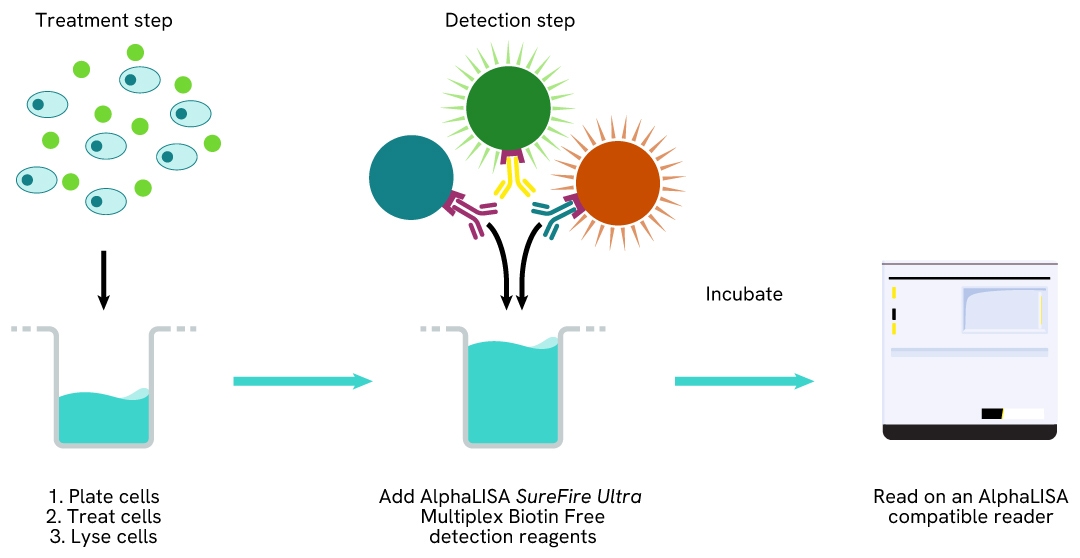
Multiplex SureFire Ultra Biotin Free assay principle
The Multiplex SureFire Ultra Biotin Free assay simultaneously measures phospho and total protein at a specific level in a biological sample (e.g. cell lysate). It utilizes three antibodies that recognize the phospho epitope and two distal epitopes on the target protein. The assay requires three bead types: two distinct Acceptor Beads and one Donor Bead.
- The Alpha 615 Acceptor Bead is coated with the CaptSure™ antibody, which binds the CaptSure-tagged anti-phospho target antibody.
- The Alpha 545 Acceptor Bead is coated with the CaptSure2 antibody, which binds the CaptSure2-tagged anti-total target protein antibody.
- The Alpha Donor Bead binds the CaptSure3 anti-total target protein antibody.
When the phosphorylated protein is present, the three antibodies bring the Donor and Acceptor Beads close together, allowing singlet oxygen to transfer energy and excite both Acceptor Beads. This generates a luminescent Alpha signal at 615nm and 545nm. The 615nm (Eu) signal is directly proportional to the amount of phosphorylated protein, while the 545nm (Tb) signal corresponds to the total protein levels.
Multiplex SureFire Ultra Biotin Free two-plate assay protocol
The two-plate protocol involves culturing and treating the cells in a 96-well plate before lysis, then transferring lysates into a 384-well Optiplate™ plate before the addition of Multiplex SureFire Ultra Biotin Free detection reagents. This protocol enables cell viability and confluence to be monitored. In addition, lysates from a single well can be used to measure different targets.
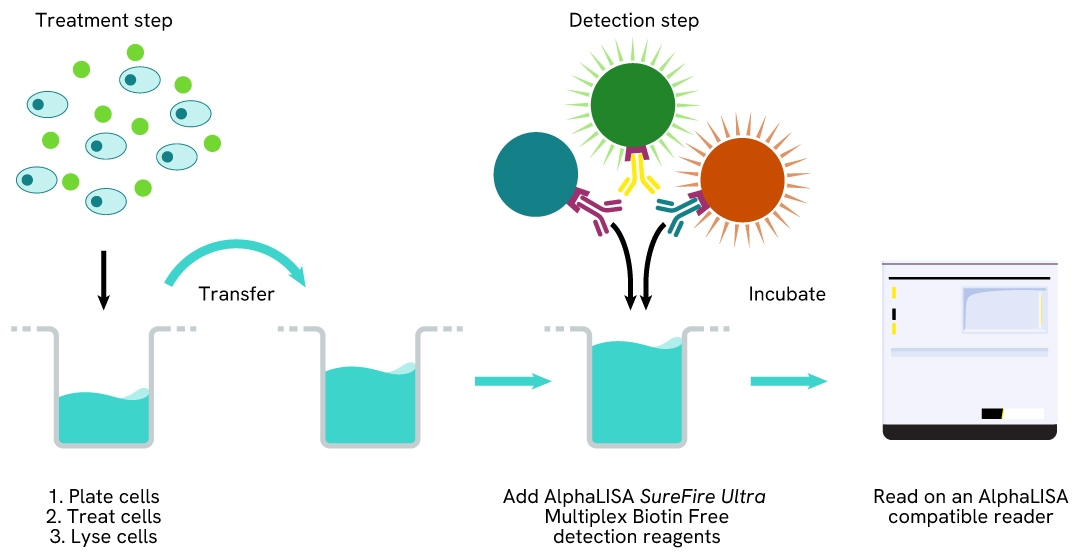
Multiplex SureFire Ultra Biotin Free one-plate assay protocol
Detection of Phosphorylated/Total target proteins with Multiplex SureFire Ultra Biotin Free reagents can be performed in a single plate used for culturing, treatment, and lysis. No washing steps are required. This HTS designed protocol allows for miniaturization while maintaining robust AlphaLISA SureFire Ultra quality.
Assay validation
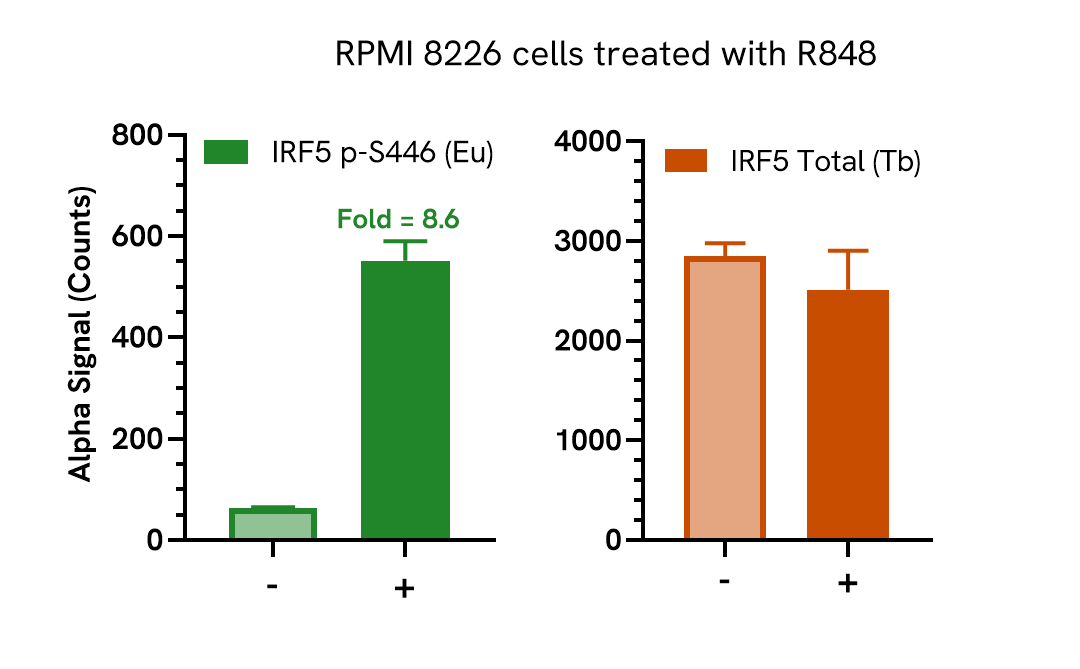
R848 mediated IRF5 activation
RPMI 8226 cells were seeded in a 96-well plate (200,000 cells/well) in complete medium at 37°C, 5% CO2. Cells were treated with 20 µM of TLR7/8 agonist, R848 for 2 hours.
After treatment, the cells were spun down and lysed with 50 µL of Lysis Buffer for 10 minutes at RT with shaking (350 rpm). IRF5 Phospho (Ser446) and Total levels were evaluated in the same wells of an assay plate using the AlphaLISA SureFire Multiplex Biotin Free assay. For the detection step, 10 µL of cell lysate (approximately 40,000 cells) was transferred into a 384-well white OptiPlate, followed by 5 µL of Acceptor mix and incubated for 1 hour at RT. Finally, 5 µL of Donor mix was then added to each well and incubated for 1 hour at RT in the dark. The plate was read on an Envision using standard AlphaPlex settings.
As expected, treatment with R848 increased phosphorylation of IRF5 at Ser446 with no significant change to Total levels.
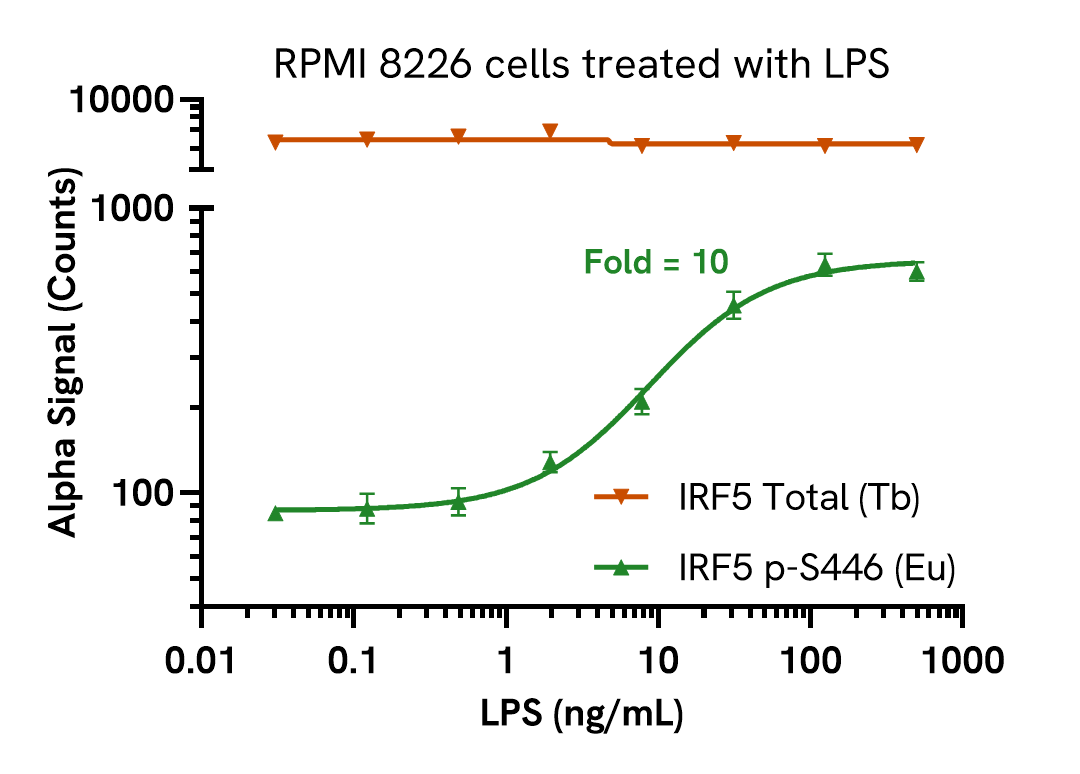
LPS mediated IRF5 phosphorylation in RPMI 8226 cells
RPMI 8226 cells were seeded in a 96-well plate (200,000 cells/well) in complete medium at 37°C, 5% CO2. Cells were treated with increasing concentrations of LPS for 4 hours.
After treatment, the cells were spun down and lysed with 65 µL of Lysis Buffer for 10 minutes at RT with shaking (350 rpm). IRF5 Phospho (Ser446) and Total levels were evaluated in the same wells of an assay plate using the AlphaLISA SureFire Multiplex Biotin Free assay. For the detection step, 10 µL of cell lysate (approximately 30,000 cells) was transferred into a 384-well white OptiPlate, followed by 5 µL of Acceptor mix and incubated for 1 hour at RT. Finally, 5 µL of Donor mix was then added to each well and incubated for 1 hour at RT in the dark. The plate was read on an Envision using standard AlphaPlex settings.
As expected, treatment with LPS increased phosphorylation of IRF5 at Ser446 with no change to Total levels.
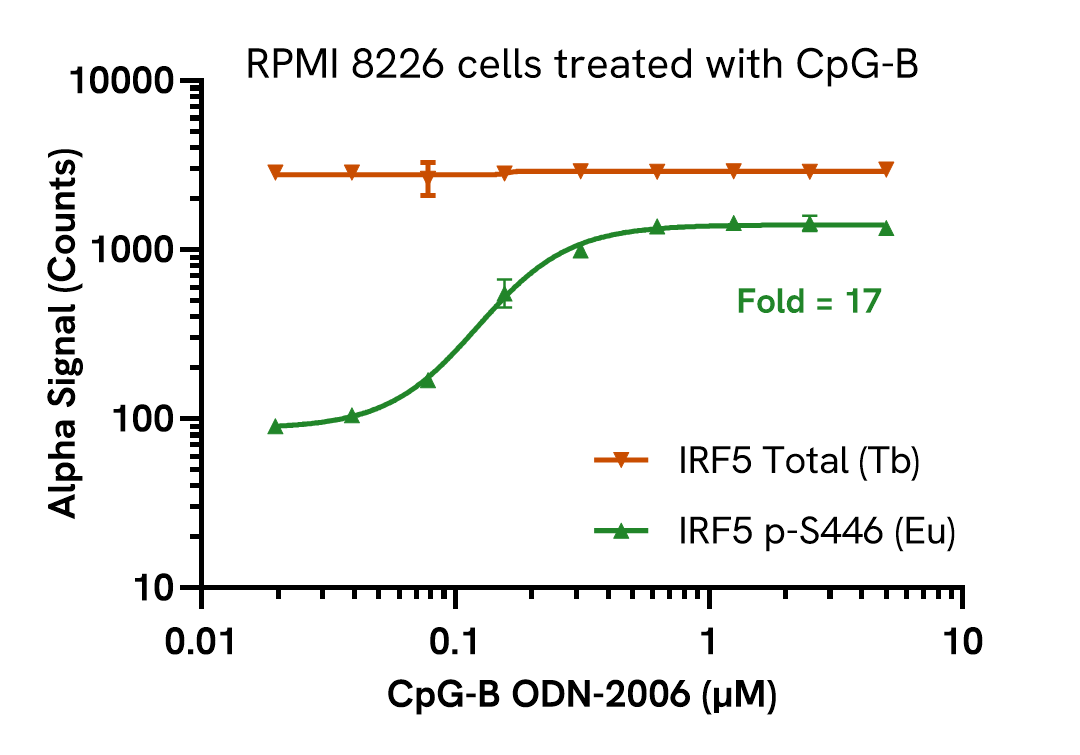
Increased IRF5 phosphorylation in response to CpG-B treatment
RPMI 8226 cells were seeded in a 96-well plate (200,000 cells/well) in complete medium at 37°C, 5% CO2. Cells were treated with increasing concentrations of CpG-B ODN 2006 for 2 hours.
After treatment, the cells were spun down and lysed with 50 µL of Lysis Buffer for 10 minutes at RT with shaking (350 rpm). IRF5 Phospho (Ser446) and Total levels were evaluated in the same wells of an assay plate using the AlphaLISA SureFire Multiplex Biotin Free assay. For the detection step, 10 µL of cell lysate (approximately 40,000 cells) was transferred into a 384-well white OptiPlate, followed by 5 µL of Acceptor mix and incubated for 1 hour at RT. Finally, 5 µL of Donor mix was then added to each well and incubated for 1 hour at RT in the dark. The plate was read on an Envision using standard AlphaPlex settings.
As expected, treatment with CpG-B increased phosphorylation of IRF5 at Ser446 with no change to Total levels.
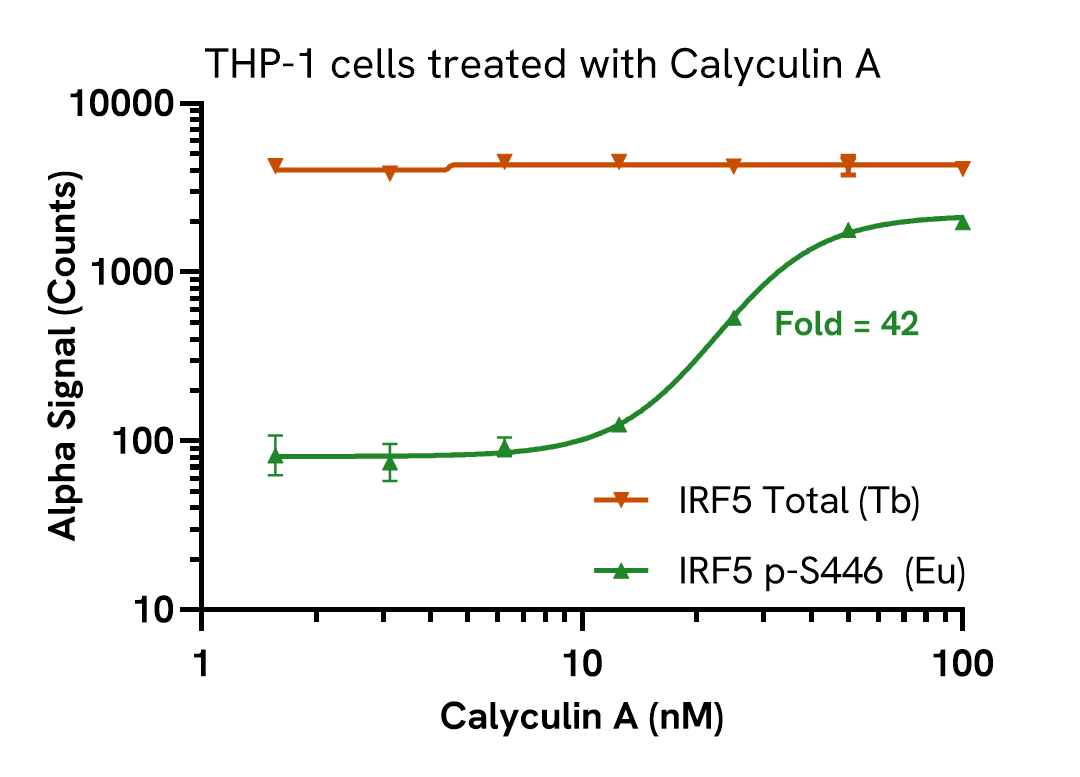
Increased IRF5 phosphorylation with Calyculin A
THP-1 cells were seeded in a 96-well plate (200,000 cells/well) in complete medium at 37°C, 5% CO2 and treated with increasing concentrations of Calyculin A for 3 hours.
After treatment, the cells were spun down and lysed with 100 µL of Lysis Buffer for 10 minutes at RT with shaking (350 rpm). IRF5 Phospho (Ser446) and Total levels were evaluated in the same wells of an assay plate using the AlphaLISA SureFire Multiplex Biotin Free assay. For the detection step, 10 µL of cell lysate (approximately 20,000 cells) was transferred into a 384-well white OptiPlate, followed by 5 µL of Acceptor mix and incubated for 1 hour at RT. Finally, 5 µL of Donor mix was then added to each well and incubated for 1 hour at RT in the dark. The plate was read on an Envision using standard AlphaPlex settings.
As expected, treatment with Calyculin A increased IRF5 phosphorylation at Ser446 with no change to Total levels.
Assay versatility
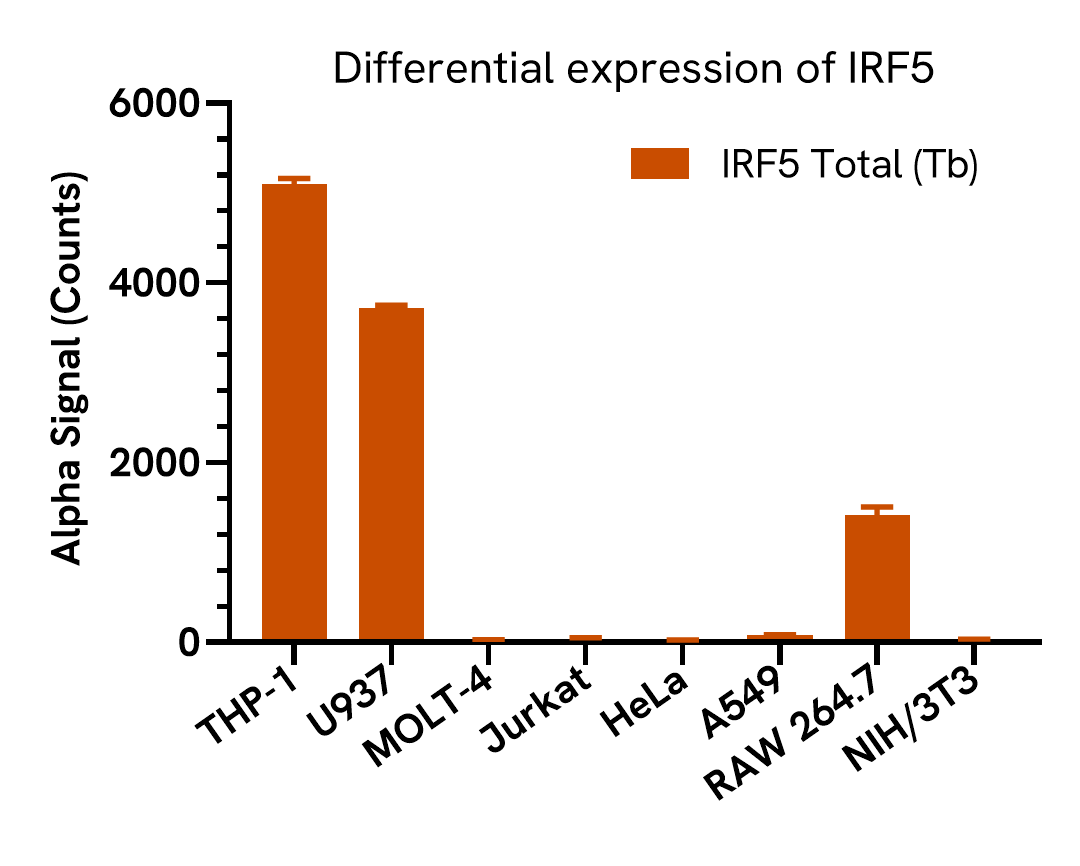
Differential expression of IRF5
Adherent cells were grown to confluency in a T175 flask at 37°C, 5% CO2 and were lysed with Lysis Buffer at a density of 200,000 cells/mL. Suspension cells were harvested and lysed with Lysis Buffer at 200,000 cells/mL.
IRF5 Total levels were evaluated using the AlphaLISA SureFire Multiplex Biotin Free assay. For the detection step, 10 µL of cell lysate (approximately 20,000 cells) was transferred into a 384-well white OptiPlate, followed by 5 µL of Acceptor Mix and incubated for 1 hour at RT. Finally, 5 µL of Donor Mix was then added to each well and incubated for 1 hour at RT in the dark. The plate was read on an Envision using standard AlphaPlex settings.
Total IRF5 expression varies depending upon cell type. High levels of expression was detected in THP-1, U937 and RAW 264.7.
Assay sensitivity
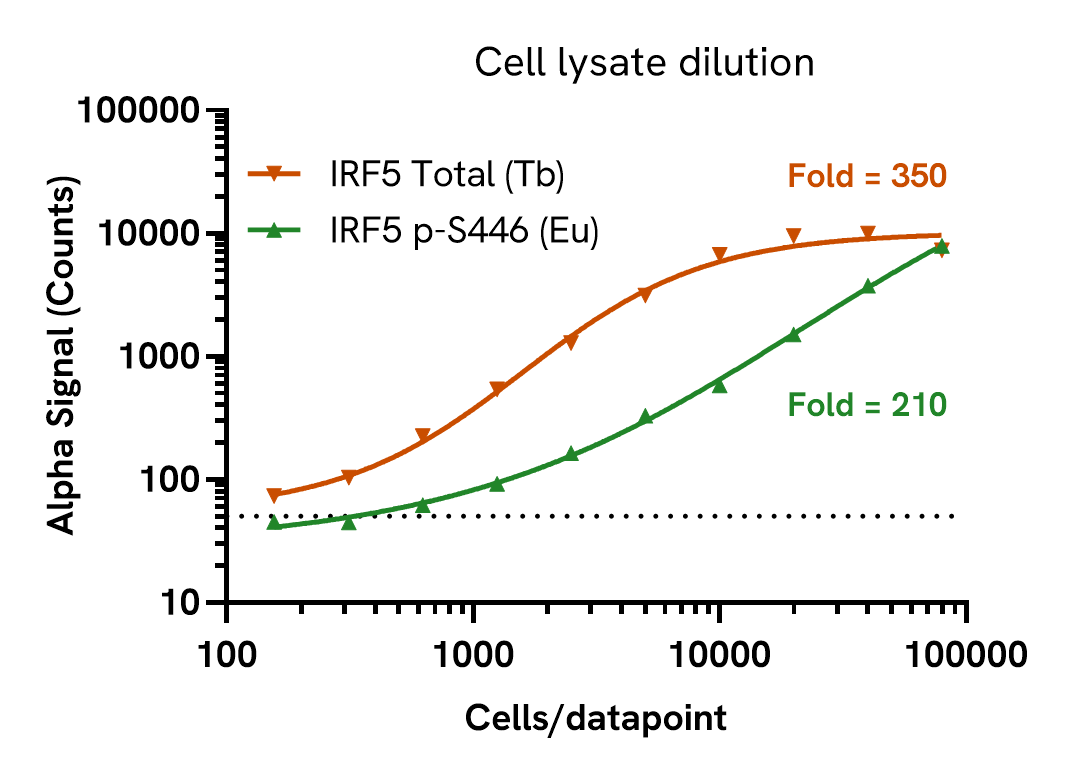
Assay sensitivity - cell lysate dilution
Cell lysate was prepared from THP-1 cells treated with 100 nM Calyculin A for 3 hours at 37°C, 5% CO2 and lysed at a final density of 8 x 10⁶ cells/mL.
Lysates were serially diluted in Lysis Buffer and assayed for Phospho (Ser446) and Total IRF5 levels using the AlphaLISA SureFire Multiplex Biotin Free kit. For the detection step, 10 µL of lysate was transferred into a 384-well white OptiPlate, followed by 5 µL Acceptor mix and incubated for 1 hour at room temperature. Finally, 5 µL of Donor mix was then added to each well and incubated for 1 hour at RT in the dark. The plate was read on an Envision using standard AlphaPlex settings.
Approximate number of cells/datapoint is indicated on the graph. Assay background is represented by the dotted line.
Specifications
| Application |
Cell Signaling
|
|---|---|
| Automation Compatible |
Yes
|
| Brand |
AlphaLISA SureFire Multiplex Biotin-Free
|
| Detection Modality |
Alpha
|
| Product Group |
Kit
|
| Protocol Time |
2h at RT
|
| Sample Volume |
30 µL
|
| Shipping Conditions |
Shipped in Blue Ice
|
| Target |
IRF5
|
| Target Class |
Phosphoproteins
|
| Target Species |
Human
|
| Technology |
Alpha
|
| Therapeutic Area |
Autoimmunity
Oncology
|
| Unit Size |
100 Assay Points
|
Resources
Are you looking for resources, click on the resource type to explore further.

Brochure
Alpha assays and reagents catalog
Alpha technolgy enables the rapid and straightforward mesaure of virtually any target. This includes enzymes, receptor-ligand...

Guide
AlphaLISA SureFire Ultra: the ultimate guide for successful experiments
The definitive guide for setting up a successful AlphaLISA SureFire Ultra assay
Several biological processes are regulated by...
Brochure
Alpha SureFire Ultra no-wash immunoassay catalog
Discover Alpha SureFire® Ultra™ assays, the no-wash cellular kinase assays leveraging Revvity's exclusive bead-based technology...
Brochure
Species compatibility for HTRF, AlphaLISA SureFire Ultra and Alpha SureFire Ultra Multiplex assays
This document includes detailed tables listing HTRF™, AlphaLISA™ SureFire® Ultra™, and Alpha SureFire® Ultra™ Multiplex assays...
Loading...


How can we help you?
We are here to answer your questions.