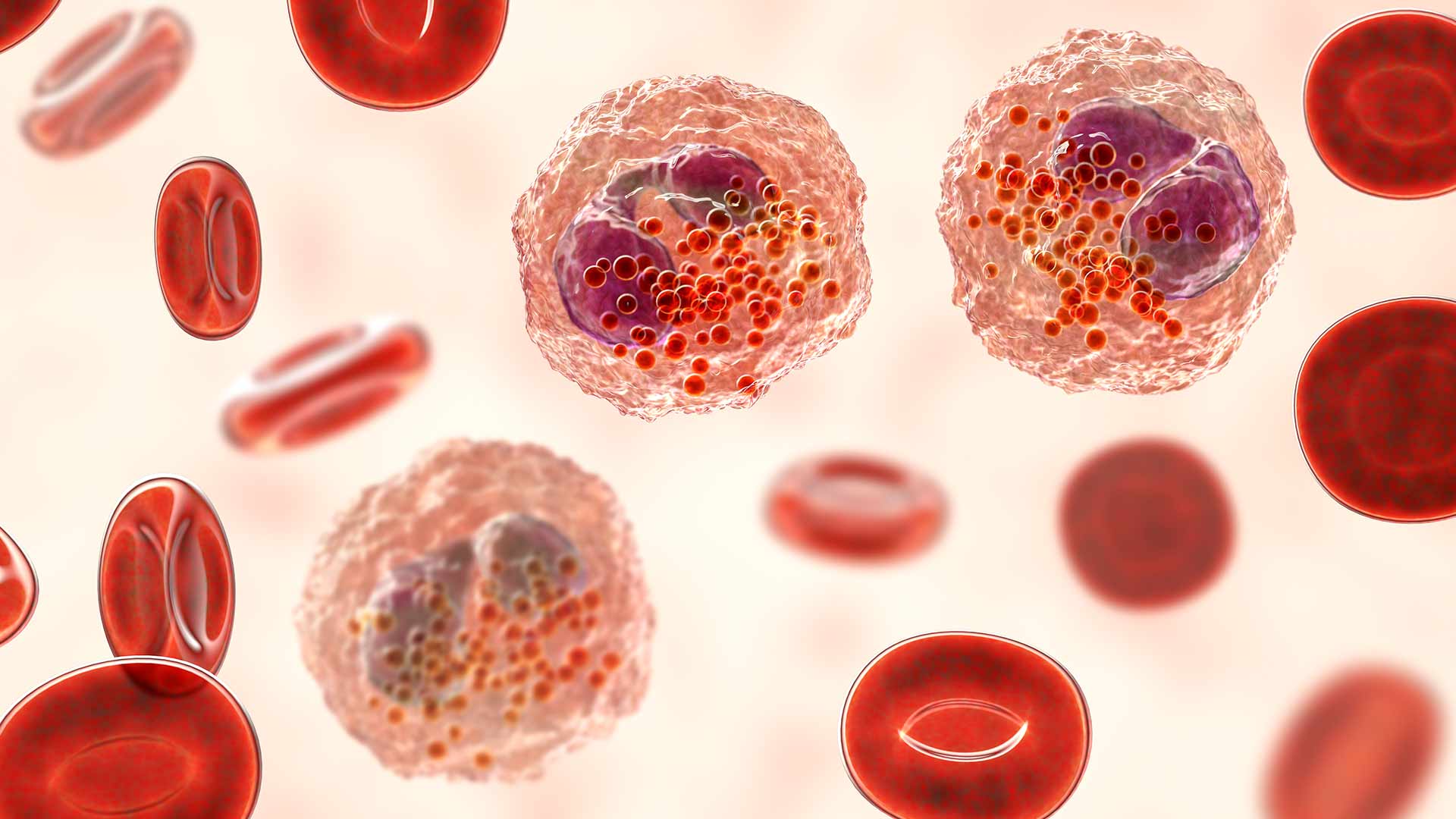

CD34+ cells are used in a wide number of applications, including humanized mouse model generation, multi-lineage hematopoietic differentiation studies, drug toxicity and efficacy screening, gene editing and transduction workflows, xenograft and reconstitution assays, as well as CAR-T and research into cell therapy development.
To support the characterization and quality assessment of CD34+ hematopoietic stem cell (HSC) products, it is essential to establish a robust bioprocess that addresses critical cell quality criteria, including identity, cell count, viability, purity, potency, microbiological safety, and infectious disease screening.
In this blog, we discuss how the Cellaca™ PLX image cytometer
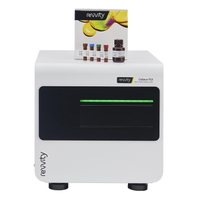
 Cellaca PLX High-throughput Image Cytometer
was used to assess key quality attributes of CD34+ HSC products.
Cellaca PLX High-throughput Image Cytometer
was used to assess key quality attributes of CD34+ HSC products.
Key takeaways:
- CD34+ HSC quality supports reproducible research. Cell identity, count, viability, purity, potency, and consistency are critical quality criteria for downstream HSC workflows.
- Cellaca PLX cytometer enables automated CD34+ cell characterization. The image cytometer measures cell count, viability, and CD34+ populations using AO/PI and multiplexed surface marker assays.
- Cellaca PLX cytometer results were comparable to flow cytometry. Post-thaw UCB CD34+ HSC measurements demonstrated comparable results for cell population and viability across both analytical methods.
- Automated quality checks can help reduce variability. Fluorescence-based counting supports low-density primary cell handling, helps reduce operator-to-operator variability, and enables in-house CD34+ HSC quality assessment.
Challenges in CD34+ cell sourcing
Poorly characterized CD34+ cells can compromise entire downstream workflows and lead to unreproducible data, inconsistent differentiation, and xenograft failure.
Key challenges include:
- Heterogeneity within CD34+ populations can introduce variability.
- Purity and viability of HSCs are important considerations for reproducible research.
- Lot-to-lot consistency is important for longitudinal studies.
Understanding CD34+ cell biology
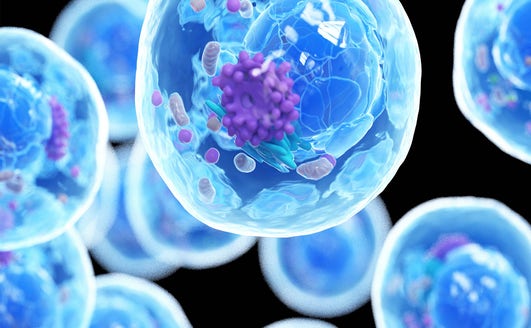
CD34+ cells are hematopoietic stem and progenitor cells identified by the surface marker CD34, a glycosylated transmembrane protein. These cells are rare, multipotent, and capable of differentiating into all blood cell types, making them valuable for research in genome editing, immune regulation, hematopoiesis, and regenerative medicine. Their potency and unique characteristics make them useful in a wide range of research applications and a valuable research tool in the lab.
Cellaca PLX cytometer: Automated cell counting for HSC research
To assess key quality metrics, researchers used the Cellaca PLX high-throughput image cytometer. The workflow incorporated a dual-fluorescence acridine orange/propidium iodide (AO/PI) viability assay and a four-color multiplexed surface marker assay to characterize the UCB CD34+ HSCs
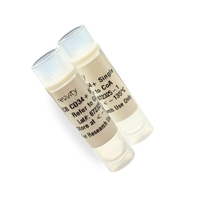
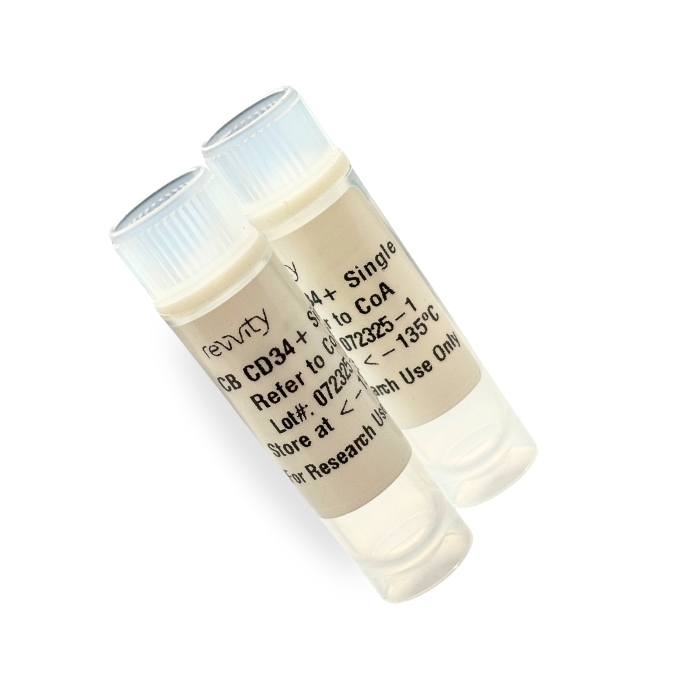 CD34+ Hematopoietic Stem Cells From Human Umbilical Cord Blood (Frozen) 1 Million Cells - Single Donor
.
CD34+ Hematopoietic Stem Cells From Human Umbilical Cord Blood (Frozen) 1 Million Cells - Single Donor
.
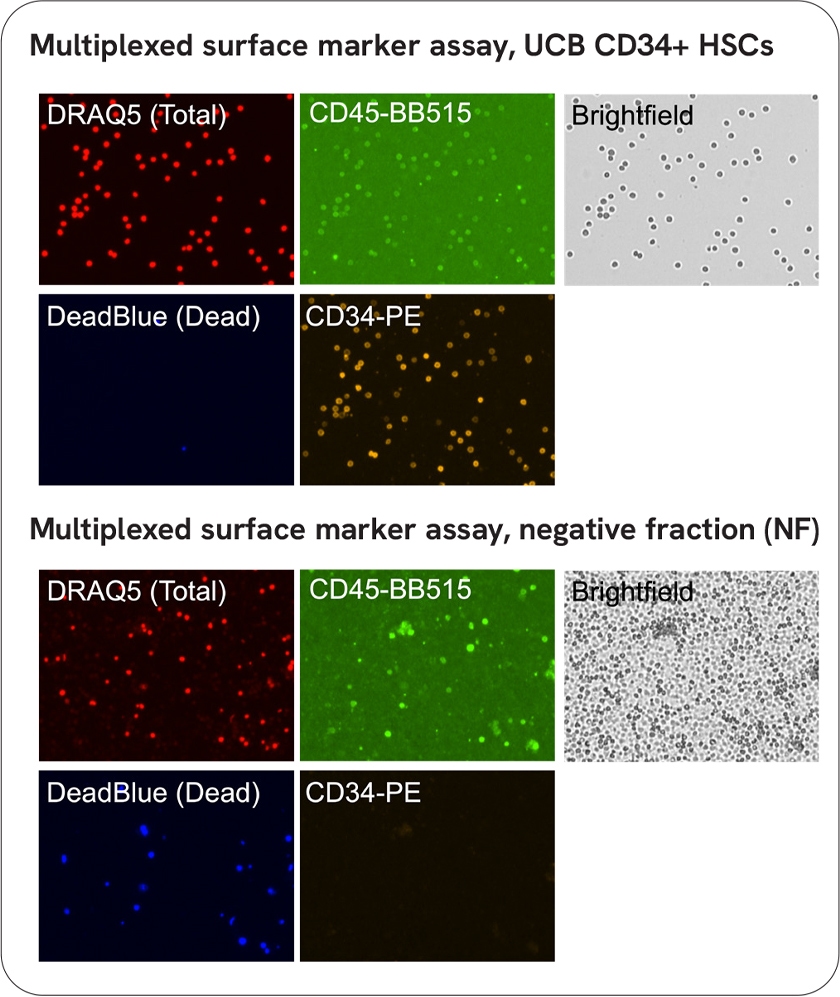
Three vials of post-thaw umbilical cord blood (UCB) CD34+ cells were analyzed using this workflow (Figure 1) and compared with results obtained via a conventional flow cytometer (Figure 2). Output metrics for cell validation included total cell count, viable cell concentration, and viability with the AO/PI viability assay.
Additionally, the Cellaca PLX cytometer was used to detect CD34+ HSCs cells from nucleated UCB cells and assess post-thaw viability. Results from post-thaw CD34+ HSCs were comparable between the Cellaca PLX image cytometer and a flow cytometer.
Figure 1: Representative images of multiplexed surface marker assay from the Cellaca PLX image cytometer
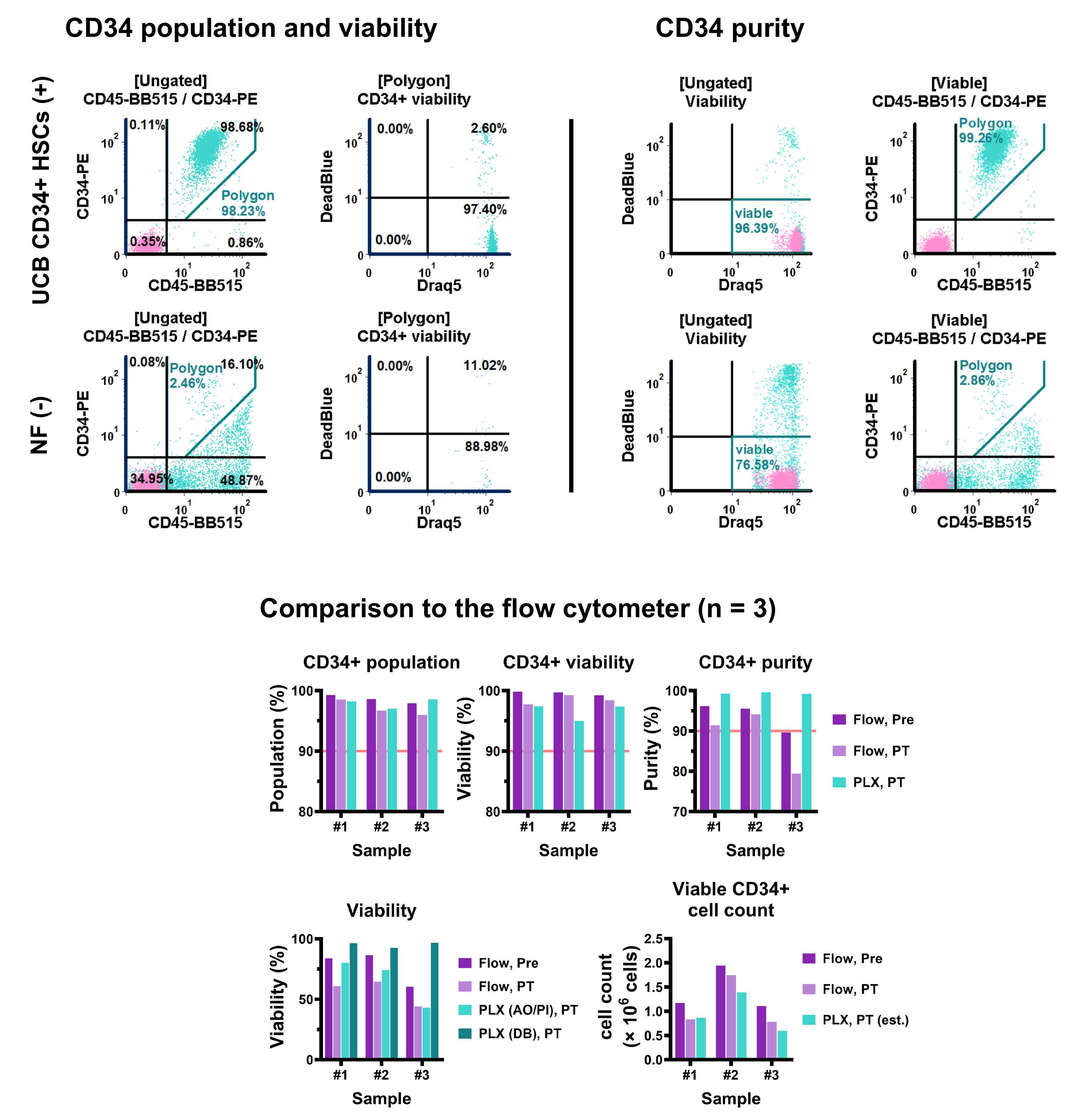
Figure 2: Population analysis of UCB CD34+ HSCs
Accurately measuring CD34+ population, viability and purity is important for reproducibility in HSC research. By automating cell counting, this study also highlights the potential of the Cellaca PLX image cytometer to provide rapid results for cell count, cell viability, and the CD34+ HSC cell population (Figure 2).
Fluorescence-based counting also highlighted the ability to handle low-density primary cell samples handling and reduce operator-to-operator variability. The streamlined workflow allows researchers to perform in-house quality assessments of CD34+ HSCs prior to downstream applications, as well as automated cell analysis.
As HSC research continues to advance, properly sourced cells are important for applications in immune studies, engraftment models, and CAR T-cell therapy and research. Revvity CD34+ cells are validated and available to support your workflow.
To explore the full findings and workflow, read this scientific poster on the characterization of CD34+ HSCs from human UCB with the Cellaca PLX image cytometer
Cellaca PLX High-throughput Image Cytometer
.
For research use only. Not for use in diagnostic procedures.