US

Revvity Sites Globally
Select your location.
*e-commerce not available for this region.



Bead Ruptor Elite 2 mL Tube Carriage
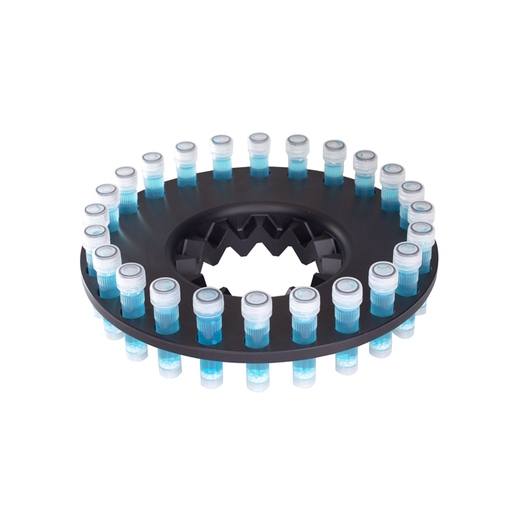
Bead Ruptor Elite 2 mL Tube Carriage
Bead Ruptor Elite 2 mL Tube Carriage
This tube carriage, together with its finger plate, securely holds up to 24 of the 2mL or 0.5 mL size skirted screw-cap tubes, supporting high-speed bead milling up to 8 m/s for efficient sample disruption. Designed for compatibility with the current Omni Bead Ruptor Elite homogenizer system.
Product variant
Unit Size: 1 each
Part #:
19-373
List price
USD 459.00
Your price:
For research use only. Not for use in diagnostic procedures.
| Feature | Specification |
|---|---|
| Capacity | 24 x 2 mL Skirted Screw Cap Tubes |
| Instrument Compatibility | Bead Ruptor Elite |
| Product Compatibility | 2 mL Tubes |
| Sample Volume | 200 µL - 1.5 mL |
| Speed | Maximum 8 m/s |
| Feature | Specification |
|---|---|
| Capacity | 24 x 2 mL Skirted Screw Cap Tubes |
| Instrument Compatibility | Bead Ruptor Elite |
| Product Compatibility | 2 mL Tubes |
| Sample Volume | 200 µL - 1.5 mL |
| Speed | Maximum 8 m/s |
Loading...
Product information
Overview
Accommodates up to 24 skirted screw-cap tubes (2 mL or 0.5 mL) and supports sample volumes from 200 µL to 1.5 mL during bead milling and sample processing on the Bead Ruptor Elite. Supports bead-beating speeds up to 8 m/s, for a uniform disruption and high-throughput performance experience. It secures tubes during the bead milling motions and rapid operational movements, supporting workflows that homogenizers and disrupts tough matrices such as tissues for analyte extraction, such as DNA, RNA, proteins, and more.
Note: Not compatible with the legacy 2015-2020 Bead Ruptor Elite hub design. Compatible with the current Omni Bead Ruptor Elite bead mill homogenizer (19-042E or 19-042J).
Specifications
| Capacity |
24 x 2 mL Skirted Screw Cap Tubes
|
|---|
| Instrument Compatibility |
Bead Ruptor Elite
|
|---|---|
| Product Compatibility |
2 mL Tubes
|
| Sample Volume |
200 µL - 1.5 mL
|
| Speed |
Maximum 8 m/s
|
| Unit Size |
1 each
|
Resources
Are you looking for resources, click on the resource type to explore further.

Flyer
A streamlined metagenomic workflow for microbiome research from stool
Stool metagenomics workflow using optimized vs non-optimized bead matrices for bead mill homogenizer for NGS library prep.

Application Note
Assay-driven buffer selection in bead mill homogenization
Compare tissue homogenization in RIPA lysis buffer vs PBS using bead mill homogenizers for cell lysis and high protein yield for...

Technical Note
Efficient bacterial RNA extraction using the Omni Bad Ruptor Elite bead mill homogenizer.
Application Note
Fast and efficient nucleic acid extraction from spinach using bead mill homogenization
Within agricultural and food studies, genomic analysis plays a large role in elucidating insights into genome modifications...
Application Note
Genomic DNA extraction from plant tissues on the Omni Bead Ruptor Elite bead mill homogenizer
Plant biology research helps our understanding behind complex mechanisms of plant growth, development, and response to...
Application Note
High throughput sample homogenization and RNA extraction from corn
Corn is an important stable crop, not only as a food source for humans and livestock, but also biofuel as well other non-food...
Loading...


How can we help you?
We are here to answer your questions.