Imagine two babies born on the same day with the same condition, just a few kilometers apart. One is identified through newborn screening within days of birth, and has the opportunity to grow up healthy. The other isn't screened until much later once symptoms appear, if at all.
Across many parts of sub-Saharan Africa, newborn screening is not yet something every family can rely on. In one district, a baby may be screened because a regional program is active. In the next, that same opportunity may not yet exist. Not because the science doesn't exist. Not because screening isn't possible.
But simply because of where they were born.
This is one of the greatest challenges in newborn screening today.
When the answer exists, but the access does not
For decades, newborn screening has helped identify serious conditions before symptoms appear, giving children the opportunity for earlier clinical follow-up when it can make the greatest difference.
For sickle cell disease (SCD), that early window matters.
Without newborn screening, affected infants may not be identified and could face a significantly higher risk of infections, stroke, anemia, pain crises, and premature mortality. Yet when newborn screening is available, and identified early, healthcare providers can begin monitoring, family education, preventive care, and planning before symptoms emerge.
The ability to screen exists. The challenge is ensuring more newborns have access to it.
Across sub-Saharan Africa, healthcare systems continue working to strengthen newborn screening programs despite infrastructure, workforce, and resource challenges. Because successful screening requires more than technology alone. It requires trained laboratory professionals, standardized workflows, sustainable healthcare systems, and long-term investment in local expertise.
The gap is no longer between science and possibility. It is between possibility and access.
Building programs that last
That challenge is now receiving global attention.
In June 2026, the World Health Organization (WHO) reinforced that newborn screening should be developed as sustainable national healthcare infrastructure, not as short-term or donor-dependent initiatives. The guidance encourages countries to begin with screening for priority conditions, such as sickle cell disease, and expand programs over time as laboratory capability, workforce, and infrastructure continue to grow.
Closing this gap won't happen overnight.
Across sub-Saharan Africa it is happening through regional collaboration, laboratory training, and investment in local capability, one community, one laboratory, and one newborn at a time.
Closing the gap through capability
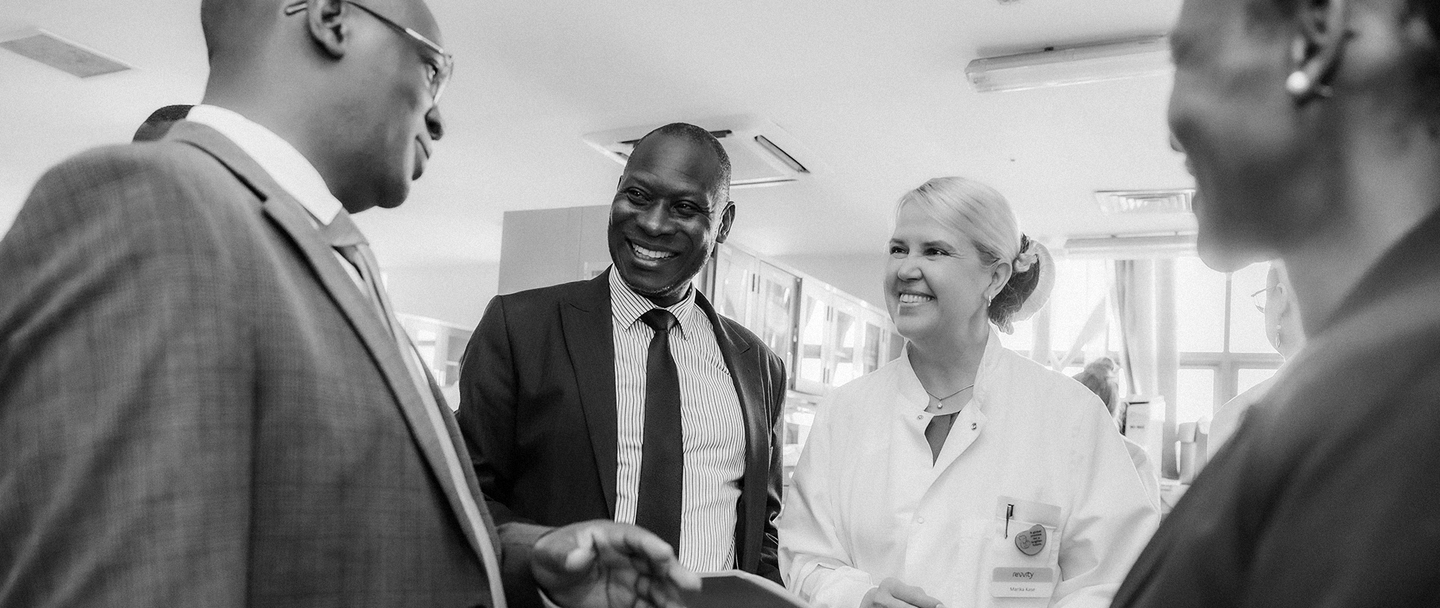
Earlier this year, laboratory professionals and healthcare leaders from seven sub-Saharan African countries representing ten laboratories gathered in Kampala, Uganda, for the 2nd CONSA Laboratory Training Summit.
Their shared goal was simple: strengthen newborn screening programs and expand access to earlier detection for sickle cell disease across the region.
The summit provided an opportunity to exchange knowledge, share experiences, and build the relationships needed to support long-term progress. Participants tackled common challenges, explored best practices, and strengthened the technical expertise required to deliver sustainable newborn screening programs.
As Marika Kase, Global Business Director for Revvity's Neonatal platform, reflected:
"What stood out most during the summit was the shared commitment from every laboratory team and healthcare leader involved. There is tremendous passion and determination to strengthen newborn screening programs across sub-Saharan Africa, and meaningful progress happens when we invest in training, collaboration, and sustainable local expertise."
Because sustainable newborn screening programs are built through people.
Building confidence, one country at a time
A key focus of the summit was hands-on technical education.
Our specialists worked directly with laboratory professionals on Migele™ IEF hemoglobinopathy screening techniques, interpretation, troubleshooting, quality processes, and laboratory best practices, helping participants strengthen confidence in hemoglobinopathy screening workflows, result interpretation, quality processes, and laboratory best practices.
The goal wasn't simply teaching a process. It was helping laboratories build the expertise needed to deliver reliable screening programs long after the training ended.
Because infrastructure matters. But knowledge creates sustainability.
Building on what already works
Sustainable newborn screening doesn't always require building new systems from the ground up.
In Uganda, the vision is to build a centralized newborn screening model, leveraging the existing dried blood spot (DBS) collection and transport network already established for HIV testing. By building on trusted infrastructure, newborn screening can expand more efficiently and sustainably.
Across sub-Saharan Africa, the right approach may vary, from centralized laboratories to regional networks, but the goal remains the same: ensuring every newborn has access to screening.
A milestone that signals progress
The summit also marked an important regional milestone.
At Uganda's Central Public Health Laboratory, healthcare leaders, laboratory professionals, CONSA representatives, and public health stakeholders celebrated the installation of Sub-Saharan Africa's first Migele™ Gel Electrophoresis Unit and workflow supporting newborn screening efforts for sickle cell disease.
The installation represents more than a new instrument. It represents growing investment in laboratory capability, local expertise, and the infrastructure needed to support and expand access to newborn screening.
What comes next
There is no single blueprint for expanding newborn screening across sub-Saharan Africa. Every country has unique needs, but the goal is the same, building sustainable screening programs that give more newborns access to early screening.
Because where a child is born should not determine whether they have access to newborn screening. And every child deserves the healthiest possible start in life.
Bridging the gap between scientific possibility and sustainable newborn screening.
For in vitro diagnostic use. This product is only available where licensed in accordance with law. Please contact your local representative for availability.