
Revvity Sites Globally
Select your location.
*e-commerce not available for this region.

NEXTFLEX UDI-UMI Barcodes (1-8)
NEXTFLEX UDI-UMI Barcodes (1-8)
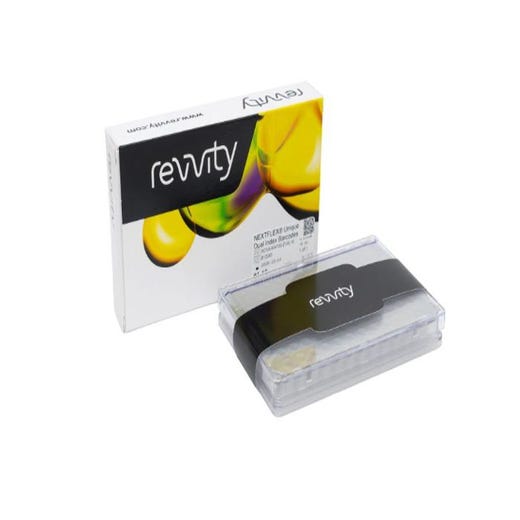
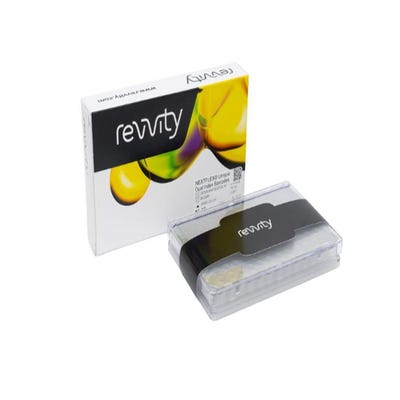
Adapters for NGS sequencing and multiplexing compatible with Illumina and Element systems.
The NEXTFLEX™ UDI-UMI Barcodes consist of 96 unique dual index (UDI) barcodes, each with a 10 bp UDI and a 9 bp unique molecular identifier (UMI). UDIs greatly reduce index hopping on Illumina® and Element® sequencers, while the UMI enables duplicate removal and low frequency variant calling in DNA seq and RNA seq workflows. The adapters are compatible with any TruSeq® style library prep, including PCR-free workflows, and enable multiplexing up to 96 samples, supplied in plated configurations for seamless manual or automated processing.
| Feature | Specification |
|---|---|
| Automation Compatible | Yes |
The NEXTFLEX™ UDI-UMI Barcodes consist of 96 unique dual index (UDI) barcodes, each with a 10 bp UDI and a 9 bp unique molecular identifier (UMI). UDIs greatly reduce index hopping on Illumina® and Element® sequencers, while the UMI enables duplicate removal and low frequency variant calling in DNA seq and RNA seq workflows. The adapters are compatible with any TruSeq® style library prep, including PCR-free workflows, and enable multiplexing up to 96 samples, supplied in plated configurations for seamless manual or automated processing.
For research use only. Not for use in diagnostic procedures.
NEXTFLEX UDI-UMI Barcodes (1-8)
Adapters for NGS sequencing and multiplexing compatible with Illumina and Element systems.
Loading...
Product information
Overview
- Full length 10 base-pair UDI + 9 base-pair UMI adapters supplied in a 96 well plate for direct use manually or automated liquid handlers.
- Reduces index hopping on Illumina and Element sequencers.
- UMI-based analysis supports duplicate removal and rare-variant research; achievable sensitivity requires validation for the assay and sample type.
- Compatible across whole genome, targeted DNA seq, and mRNA seq workflows including those with PCR-free protocols
- Drop in compatibility with TruSeq® style library prep chemistries from Revvity, Watchmaker, Illumina, NEB, KAPA, and Twist, no protocol changes required.
- Supports 8–96 multiplexing per lane
- Every lot is functionally verified and tested for index purity (>99.9%) by sequencing.
Additional product information
Integrated UDI + UMI architecture
Each kit arrives as a 96 well plate, every well holding a full length adapter pair with a 10 bp Unique Dual Index (UDI) and a 9 bp Unique Molecular Identifier (UMI). The barcode is compatible with standard TruSeq® workflows. Placing distinct 10 base UDI on both ends of every fragment reduces misassignment and index hopping rates below 0.1-0.3 % on Illumina® and Element® flow cells.
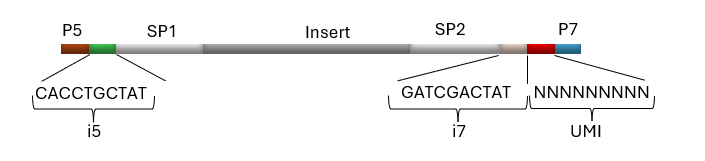
Figure 1. Example of a library containing NEXTFLEX UDI-UMI Adapters, where Insert = DNA fragment or RNA-derived cDNA fragment from a sample, P5 and P7 = Flow cell binding sites for Illumina® platforms, SP1 and SP2 = Binding sites for sequencing primers, i5 and i7 = Short pair of 10 bp sequences used to identify a particular sample (UDI), and UMI = 9 bp sequence used to label molecules for UMI-based grouping and analysis.
The 9 bp UMI, also known as a molecular barcode, is attached to each DNA fragment or RNA-derived cDNA fragment before amplification. During analysis, reads are grouped using the UMI and mapping context, with correction for UMI errors. Families with sufficient read support can be used for consensus-based error correction. Molecular-family counts can help assess captured diversity, but UMI collisions and sampling must be considered. UMI tagging does not correct losses or errors introduced before tagging. Rare-variant sensitivity must be validated for the assay and sample type. For analysis guidance, review the common bioinformatic challenges with UDI-UMI data we outline here.
Each UMI is a 9 nt sequence drawn from a roughly equimolar mix of A, T, C, G bases yielding 4⁹ ≈ 262 k unique tags. Collision rates depend on the number of original molecules sharing the same grouping context and the observed UMI distribution. The uniform base composition also improves cluster calling and phasing on Illumina® and Element® flow cells, ensuring that UMI information is read accurately for downstream duplicate removal and variant calling.
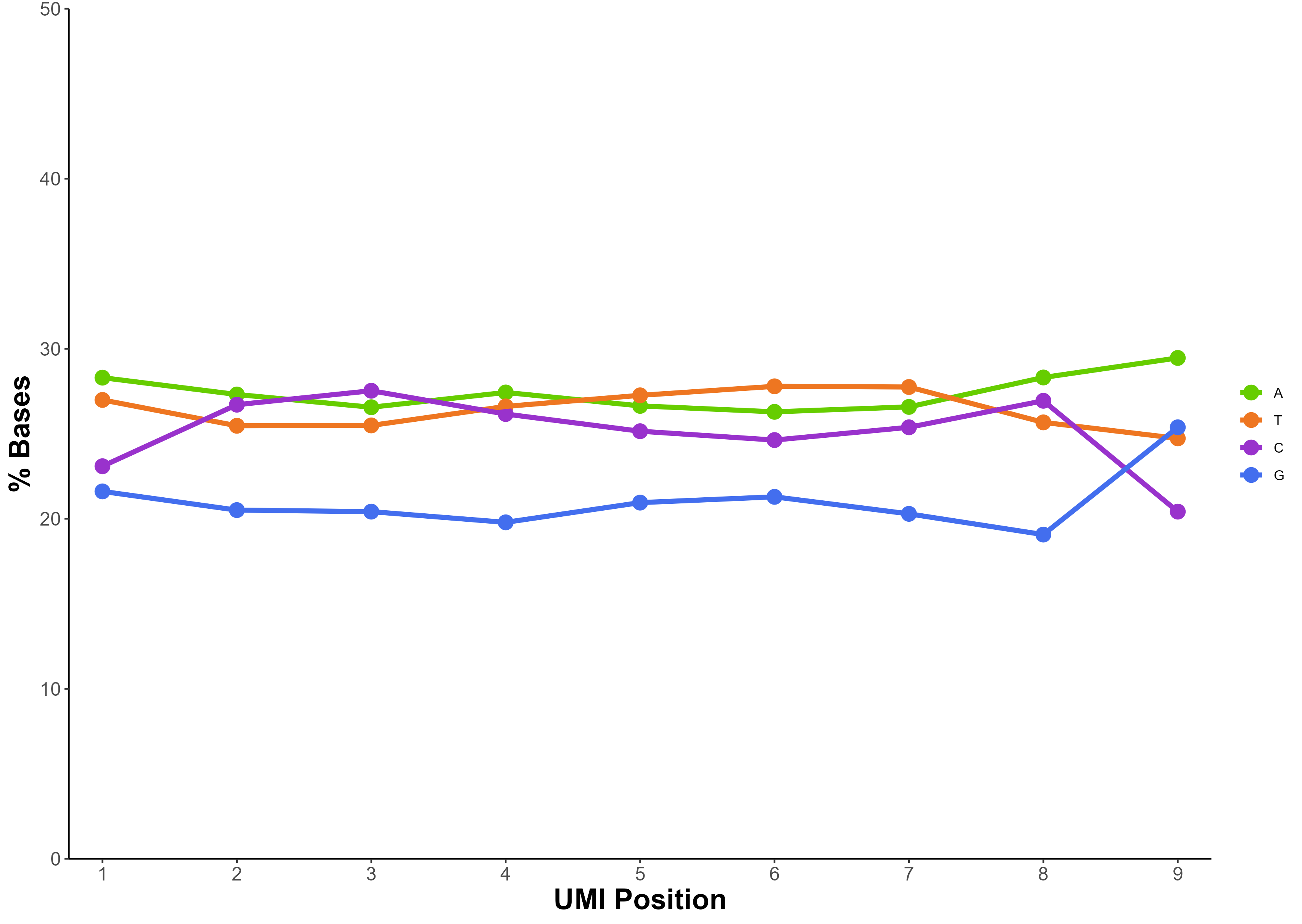
Figure 2. Balanced nucleotide composition across the 9 bp Unique Molecular Identifier (UMI) in 24 NEXTFLEX UDI UMI libraries prepared from 0.1–1000 ng human gDNA with the NEXTFLEX Rapid XP v2 DNA seq Kit and sequenced on an Illumina® MiSeq™ system, showing the per-position nucleotide composition in these tested libraries.
Quantitative sequencing
When starting from low input, FFPE or GC skewed samples, extra PCR cycles can magnify polymerase bias and inflate duplicate counts, making alignment based deduplication unreliable, especially for highly expressed transcripts. By reducing overrepresentation from PCR, the NEXTFLEX UDI-UMI adapters improve the linear correlation between true and observed expression.
Rare variant analysis
UMI-family consensus can reduce random sequencing errors and some errors introduced after tagging when sufficient family support is available. PCR-free preparation avoids library-amplification errors, but PCR-free compatibility alone does not establish consensus-based error correction: a singleton UMI family cannot provide multi-read consensus support. Rare-variant sensitivity depends on the assay, sample input, molecular coverage, and analysis and must be validated. See our deep dive on the power of UMIs in cancer research for data examples
Specifications
| Automation Compatible |
Yes
|
|---|---|
| Barcodes |
1 - 8
|
| Product Group |
Barcodes
|
| Shipping Conditions |
Shipped in Dry Ice
|
| Unit Size |
8 rxns
|
FAQs
-
How many unique molecular tags are available with the 9 bp UMI?
-
What sequencing depth is required to detect 0.1 % variant allele frequency (VAF) with simplex UMIs?
-
When should I consider duplex UMIs for rare-variant analysis?
-
Can these adapters be used in PCR free workflows?
-
How do I collapse UMI families and remove PCR duplicates?
-
Are the adapters automation friendly for 96 well liquid handlers?
-
What are the recommended storage conditions and shelf life for NEXTFLEX UDI UMI adapter plates?
Resources
Are you looking for resources, click on the resource type to explore further.

Application Note
Mitigate index hopping and spread of signal on patterned flow cells.
This application note describes the benefits of using UDI Barcodes.
Loading...


How can we help you?
We are here to answer your questions.