
The way antibody candidates are evaluated is shifting. As development programs become more complex and timelines more compressed, teams are under increasing pressure to generate meaningful analytical insight earlier in the process. These shifts are particularly visible in CMC workflows, where analytical expectations are moving earlier in development.
To better understand how analytical strategies are evolving, Revvity’s Stéphane Martinez, MD, shared his perspective on how early characterization, high-throughput technologies, and data-driven approaches are helping teams make more confident decisions from the outset.
Q: How can QC labs manage high data volume in late-stage biologics manufacturing without slowing timelines?
“As biologics progress from development into late-stage manufacturing, QC labs must handle thousands of data points per campaign without compromising timelines. No-wash formats such as HTRF™ and AlphaLISA™ naturally support high-throughput, automated workflows, dramatically reducing hands-on time and operator intervention.”
From a resource standpoint, QC labs report:
- Reduced labor costs
- Lower consumable usage
- Fewer repeat assays due to operator error
- Easier method transfer between sites
Customers operating automated QC workflows also report a clear preference for no-wash formats, as they integrate seamlessly with liquid handling systems and reduce operator-dependent variability.
Q: When does antibody characterization truly become critical in development?
“One of the most common misconceptions is that characterization becomes important only at later stages, once a lead candidate has already been selected. In reality, the need for characterization starts much earlier.”
Early insight into antibody functionality, stability, and binding behavior can significantly influence candidate selection. Without this understanding, teams risk advancing molecules that may later present developability challenges, leading to costly delays or failure at later stages.
In many cases, these risks only become visible during CMC development, when the cost of addressing them is significantly higher.
Q: What is the impact of removing wash steps on variability in QC assays?
“Removing wash steps eliminates a major source of variability, which is particularly important in QC settings where reproducibility across operators, sites, and time is essential.”
By simplifying workflows and reducing manual intervention, no-wash formats help standardize assay performance. This consistency is critical for maintaining data integrity, especially as workflows scale across teams and locations.
In high-throughput environments, minimizing variability is not just a quality benefit, it is a requirement for reliable, reproducible results.
Q: What are the key challenges teams face with more complex antibody formats?
“As antibody formats become more sophisticated, the analytical burden increases accordingly. Bispecific and multispecific antibodies, for example, introduce additional layers of complexity, from chain pairing and structural stability to functional activity across multiple targets.”
Complexity makes it more difficult to rely on traditional, sequential testing approaches. Instead, teams need methods that can evaluate multiple parameters simultaneously, often with limited material and within tight timelines. This is where scalability and throughput become critical, not just for efficiency, but for enabling better scientific decisions.
Q: How are high-throughput technologies changing antibody characterization?
“The real advantage is not just speed, it is the ability to compare, prioritize, and make decisions with confidence. Because no-wash formats are inherently robust and automation-friendly, they scale naturally as sample numbers increase, avoiding the need for disruptive method changes late in the lifecycle.”
High-throughput, homogeneous assay technologies are playing an increasingly important role in modern workflows. By enabling rapid, parallel evaluation of multiple candidates and conditions, these approaches allow researchers to generate meaningful data earlier in the development process.
This shift is particularly relevant as development programs become more data-driven. The ability to generate high-quality, comparable datasets at scale is becoming a key enabler for smarter candidate selection.
Q: What risks are associated with delaying characterization?
“Delaying characterization often means that critical issues are identified too late. Problems related to stability, binding, or developability may only become visible at advanced stages, when the cost of addressing them is significantly higher.”
This is one of the main drivers behind the industry’s shift toward earlier analytical investment. The goal is not simply to generate more data, but to ensure that the right decisions are made at the right time.
Q: How is the role of data evolving in antibody development?
“An important shift in the field is the growing role of data. Development is increasingly driven by the ability to generate, interpret, and act on complex datasets. This is where high-throughput technologies and next-generation analytical methods are beginning to reshape workflows, particularly in CMC environments where data depth and reliability are critical.”
While automation and AI are often discussed in this context, their real value lies in enabling teams to:
- Process larger datasets
- Identify patterns earlier
- Support more confident decision-making
The future of antibody development will not only depend on better molecules, but on better ways of understanding them.
Conclusion
- As antibody therapeutics continue to grow in complexity, the need for earlier and more robust characterization is becoming impossible to ignore. High-throughput analytical approaches, combined with data-driven strategies, are helping development teams shift from reactive problem-solving to proactive decision-making.
- In this evolving landscape, the ability to generate actionable insight early may be one of the most important factors in accelerating successful biologic development. This shift is particularly important as analytical expectations traditionally associated with CMC are now moving earlier in development.
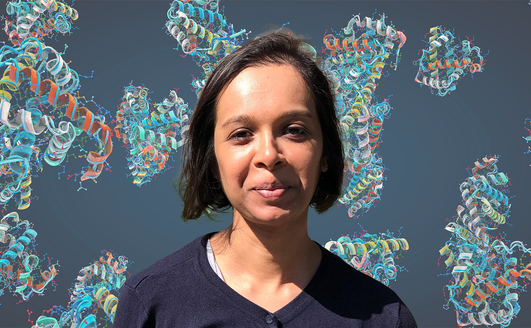
About Stéphane:
- Stéphane is a seasoned life sciences professional with more than 25 years of experience advancing breakthrough technologies for drug screening and preclinical research. He holds a Master of Science in Engineering in Biochemistry and Immunotechnology and currently serves as Product Manager at Revvity, focusing on neurodegenerative diseases and biologics characterization.
- His expertise spans fluorescence‑based detection, genome engineering, and stem cell–based models. With a career covering scientific support, product management, business development, and sales, Stéphane brings a uniquely cross‑functional perspective and a strong customer‑centric approach, building long‑term collaborations with leading biotech and pharmaceutical innovators worldwide.
For research use only. Not for use in diagnostic procedures.