The hemocytometer
 Disposable Hemacytometer, 1 box of 25
has been an essential tool for hematologists, medical practitioners, and biologists for over a century. Depending on where it is being used, the word has multiple spellings such as hemacytometer, hemocytometer, haemacytometer, or haemocytometer, but for consistency purposes, the word “hemocytometer” will be used in this review. The prefix “hema”, “hemo”, “haema”, or “haemo” means blood, while “cytometer” means a device to measure cells. The device was initially used by medical practitioners to analyze patient blood samples, which was the initial spark that created the field of hematology.
Disposable Hemacytometer, 1 box of 25
has been an essential tool for hematologists, medical practitioners, and biologists for over a century. Depending on where it is being used, the word has multiple spellings such as hemacytometer, hemocytometer, haemacytometer, or haemocytometer, but for consistency purposes, the word “hemocytometer” will be used in this review. The prefix “hema”, “hemo”, “haema”, or “haemo” means blood, while “cytometer” means a device to measure cells. The device was initially used by medical practitioners to analyze patient blood samples, which was the initial spark that created the field of hematology.
The hemocytometer
Disposable Hemacytometer, 1 box of 25
has gone through a series of major developments in the 1800s and early 1900s. The modern-day hemocytometer utilizes a double-chamber format and counting grids developed by O. Neubauer. This format allows the user to perform two cell counts for each sample without having to clean it.
Download this white paper for a complete historical review
 Whitepaper
The historical development of the hemacytometer
.
Whitepaper
The historical development of the hemacytometer
.
The hemocytometer has been used to count cells ranging from algae, yeast, cancer cells, stem cells, blood cells, to even parasites and spores. Although a variety of automated cell counting instruments have been developed, the current golden standard that researchers fall back on is still manual counting with hemocytometers.
Manual Cell Counting with a Hemocytometer
Step 1: Prepare
Clean the hemocytometer and glass coverslip with 70% EtOH.
Step 2: Prep sample
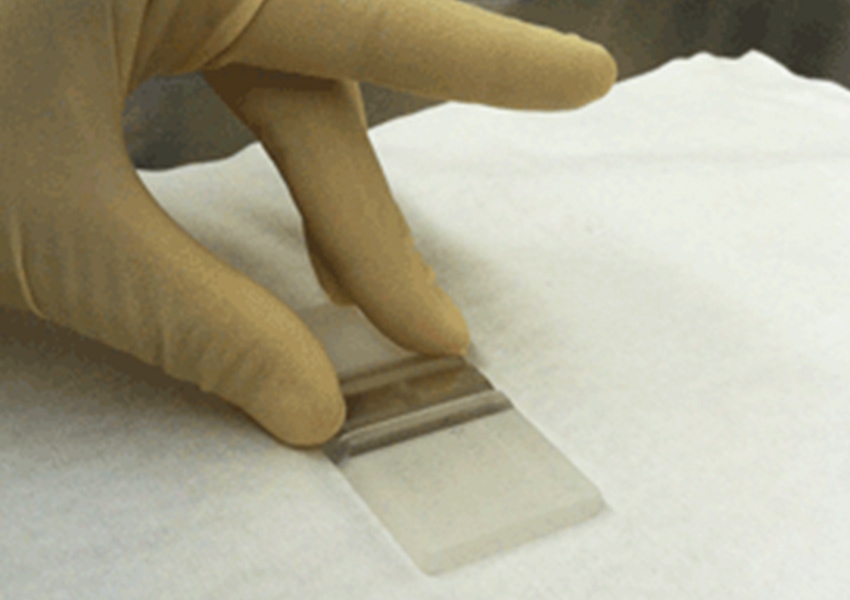
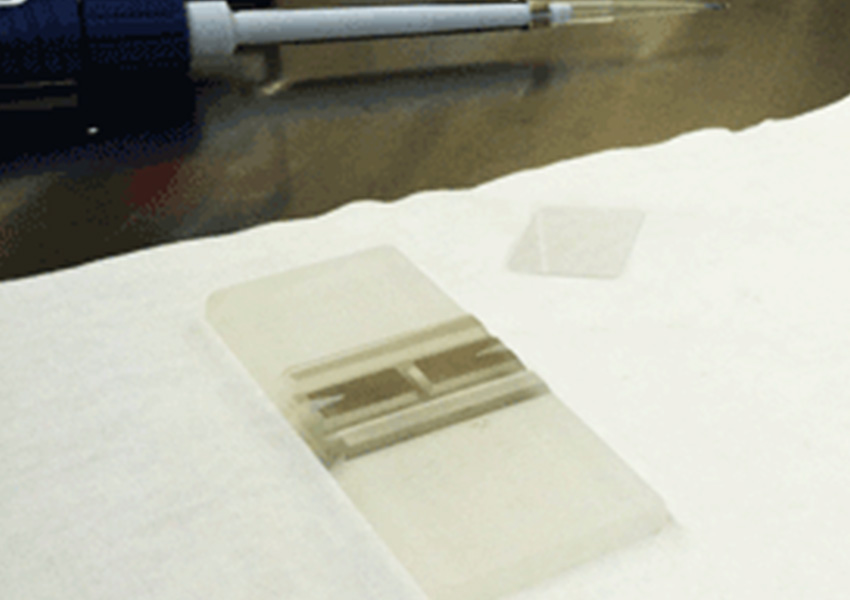
Place the glass coverslip over the counting chambers.
Step 3: Load
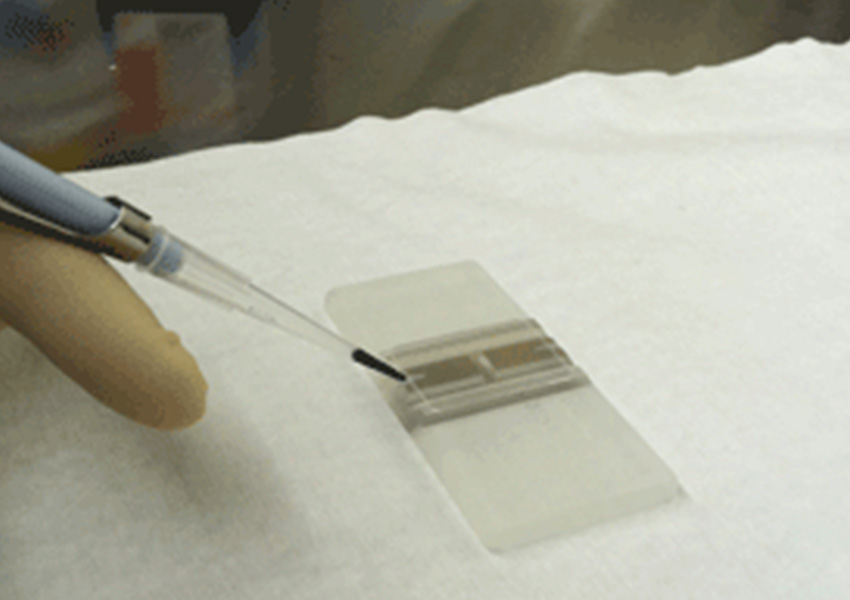
Pipette 10 microliters of cell sample into the hemocytometer.
Step 3. Manually count cells in the sample
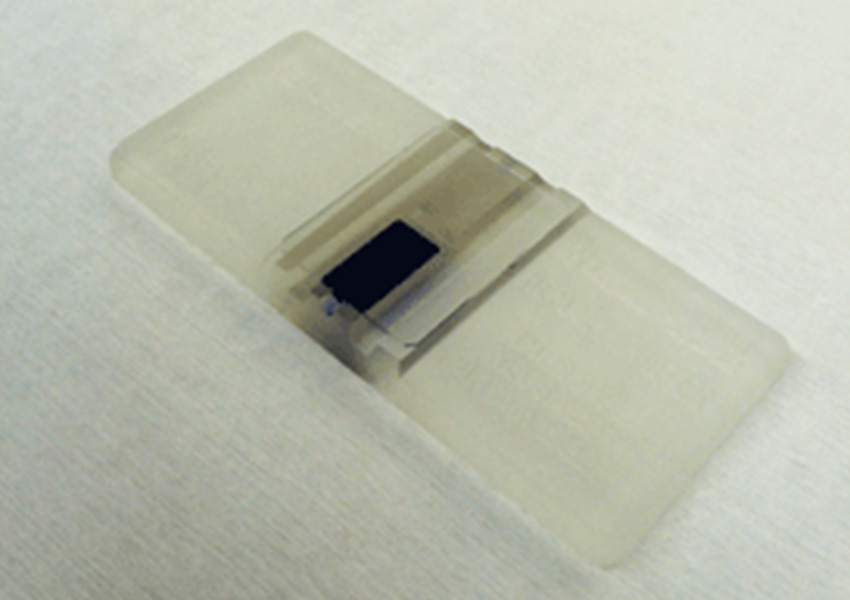
Place the hemocytometer under a microscope with a typical magnification of 100.
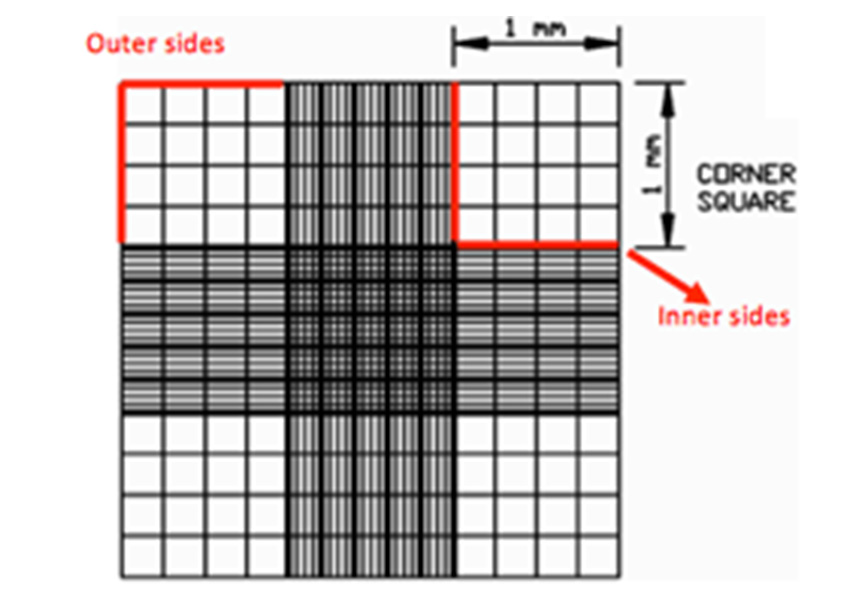
Focus both on the grid pattern and the cell particles and count the total number of cells found in 4 large corner squares. If cells are touching the 4 perimeter sides of a corner square, only count cells on 2 sides, either the 2 outer sides or 2 inner sides.
Step 4: Cell calculations and disposal
Multiply the dilution factor by the total number of cells, divide by the # of corner squares counted, and multiply by 104 to obtain cell concentration (cells/ml).

Clean hemocytometer and glass coverslip with 70% EtOH.
Key learnings:
- Hemocytometers are foundational but manual - While hemocytometers have been the standard for cell counting, they require manual counting under a microscope, which is time-consuming and prone to user variability.
- Hemocytometers can count a wide range of cell types – Types of cells can include algae, yeast, cancer cells, stem cells, blood cells, to even parasites and spores.
- Cell counting accuracy depends on the user’s technique - Inconsistencies arise from subjective decisions about which cells to count, uneven sample distribution, and user-to-user variability, making reproducibility challenging.
- Automated cell counters offer advantages - Modern automated cell counters (like Revvity's Cellometer or Cellaca systems) reduce subjectivity, improve reproducibility, save time, and provide additional metrics like viability percentages and cell size distribution.
For research use only. Not for use in diagnostic procedures.